Acne treatment that works in Iraq: a dermatologist guide
Why acne keeps coming back, which treatments genuinely change it, and how long each one needs before you judge the result.

Acne is the single most common reason patients contact the clinic, and it is also the condition most often treated badly. Most people arrive after months of pharmacy creams, herbal mixtures and antibiotic courses that were never long enough to work. The good news is that acne is highly treatable when the plan matches the type of acne and is given enough time.
Key points
- Acne is not caused by dirt, and harsh washing makes it worse
- Antibiotics alone are never the answer and should not run for months
- Any plan needs eight to twelve weeks before judgement
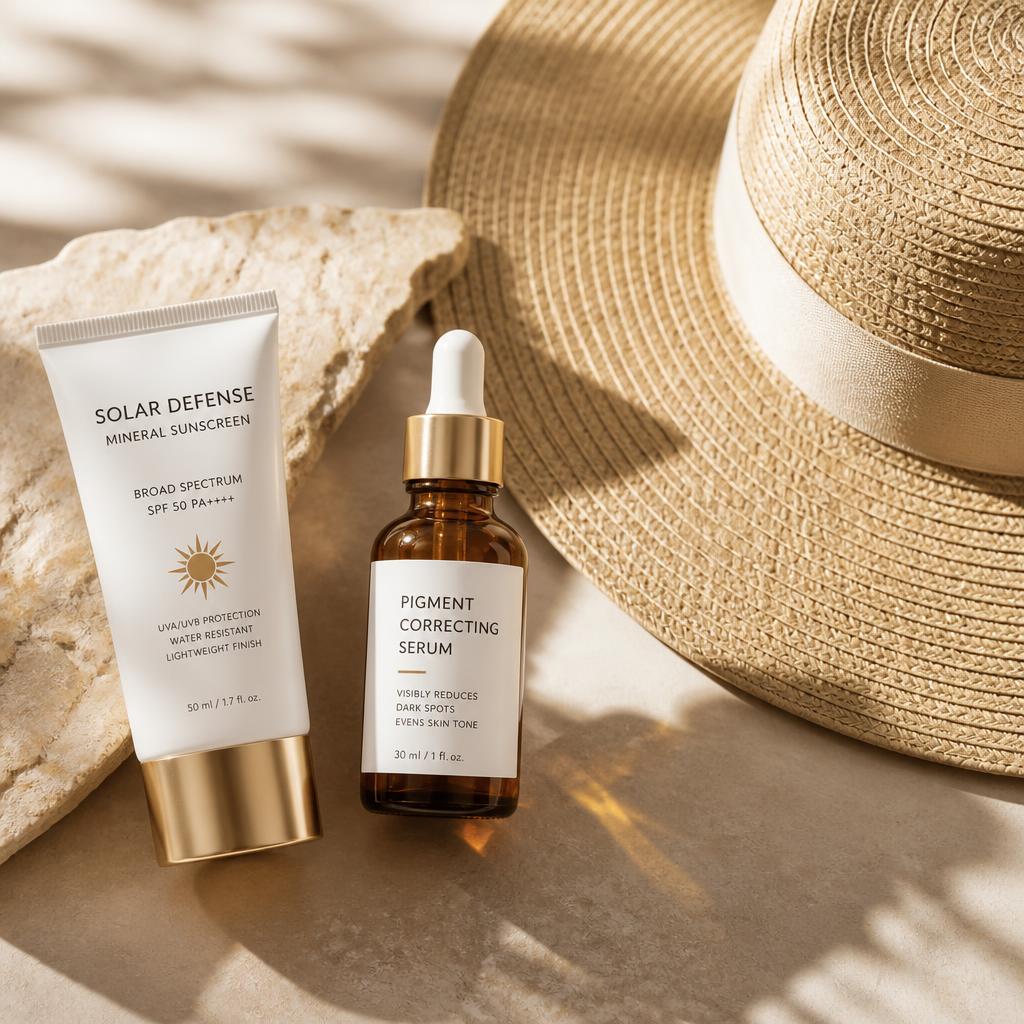
- Sunscreen prevents the dark marks that patients most dislike
- Scar treatment comes after the acne is controlled
What actually causes acne
Acne is not caused by poor hygiene. Four things combine: oil production driven by hormones, blocked pores, an overgrowth of Cutibacterium acnes, and inflammation. Washing more often does not touch any of these, and scrubbing usually makes inflammation worse.
Heat, humidity, dust and heavy sweating, all normal in Iraqi summers, do add to pore blockage. So do thick makeup, hair oils applied to the forehead and hairline, and occlusive sunscreens chosen without advice.
Matching the treatment to the type
Comedonal acne, the blackheads and small bumps across the forehead and chin, responds to a topical retinoid used nightly. Inflammatory acne with red painful spots usually needs a topical retinoid plus benzoyl peroxide, sometimes with a short oral antibiotic course of three months maximum, never as a long-term treatment on its own.
Nodular or scarring acne, and acne that has resisted good topical treatment, is where oral isotretinoin is considered. It is a highly effective medicine that requires blood tests, contraception planning for women, and proper follow up. In women with irregular periods, unwanted hair growth or acne along the jawline, hormonal causes such as polycystic ovary syndrome are investigated before anything else.
How long before you judge it
Give any acne plan eight to twelve weeks before deciding it failed. Retinoids commonly cause dryness and a temporary flare in the first two to four weeks; stopping at that point is the most common reason treatment fails. Introduce a retinoid every second night with a plain moisturiser for the first fortnight, then build up.
- Weeks 1 to 4: dryness, mild peeling, possible purge
- Weeks 4 to 8: fewer new spots forming
- Weeks 8 to 12: clear improvement in redness and count
- Months 4 to 6: maintenance to stop relapse
Protecting against scars and dark marks
On medium and darker skin, the mark left behind matters as much as the spot itself. Post-inflammatory hyperpigmentation fades over months and is made much worse by sun and by picking. Daily broad spectrum sunscreen is part of the acne treatment, not an optional extra.
True scars, the ice pick and rolling depressions, do not fade on their own. They are treated later with microneedling, chemical peels, subcision or fractional laser, but only once active acne is controlled. Treating scars while acne is still inflamed wastes both time and money.
Frequently asked questions
Does food cause acne?
The evidence points to high glycaemic diets and, in some people, skimmed dairy having a modest effect. Diet alone will not clear acne, and restrictive diets are not recommended.
Can acne be treated in an online consultation?
Yes. Acne is one of the conditions best suited to video consultation, with clear photographs taken in daylight. Treatment plans and monitoring can be handled remotely, and prescriptions are coordinated with your local doctor.
Step by step treatment pathway
Acne
A stepwise pathway from first assessment to refractory disease, following AAD and NICE recommendations adapted for a hot, dusty climate and for darker skin types.
Step 1: assessment and diagnosis
- Confirm the lesion type: comedones, inflammatory papules and pustules, nodules, cysts, or a mix. Photograph at baseline.
- Count active scarring. Any scarring at all moves treatment up a line immediately [1].
- Screen for hormonal drivers in women: irregular periods, excess hair growth, jawline distribution, sudden adult onset.
- Take a full product and drug history. Hair oils, thick sunscreens, anabolic steroids, lithium and some progestogens all aggravate acne.
Step 2: grading severity
Mild
Comedones with a few inflammatory lesions, no nodules, no scarring.
Topical only. Review at 12 weeks.
Moderate
Widespread papules and pustules, truncal involvement, early post-inflammatory marks.
Combination topical with or without a limited oral antibiotic course.
Step 3: treatment in sequence
First line
- Topical retinoid nightly, started every second night for two weeks with a plain moisturiser to build tolerance.
- Benzoyl peroxide 2.5 to 5 percent in the morning, or a fixed combination product to improve adherence [2].
- A non-comedogenic moisturiser and a light fluid sunscreen, essential with retinoids in strong sun.
- Never use a topical antibiotic alone, because resistance develops quickly. Always pair it with benzoyl peroxide [1].
Second line
- Add an oral antibiotic, usually doxycycline, for a maximum of three months alongside the topical retinoid and benzoyl peroxide [1,2].
- In women, combined hormonal contraception or spironolactone where appropriate and when there are no contraindications.
- Switch to a stronger or better tolerated retinoid, or add azelaic acid where pigmentation is prominent, which suits darker skin well.
Third line and refractory disease
- Oral isotretinoin for nodular, scarring, relapsing or psychologically severe acne, with baseline liver and lipid tests, pregnancy prevention planning and scheduled follow up [4].
- Reassess the diagnosis if there is no response: consider gram-negative folliculitis, Malassezia folliculitis, rosacea, or a drug cause.
- Investigate for polycystic ovary syndrome or another endocrine cause in women with resistant, hormonally patterned acne.
- Treat scarring only once acne is controlled: subcision, TCA CROSS, fractional resurfacing.
Special groups
Children and teens
Topical treatment is safe from the pre-teen years. Very early or severe childhood acne needs an endocrine review. Tetracyclines are avoided under the age of 12.
Pregnancy and planning pregnancy
Retinoids of any route and tetracyclines are contraindicated. Topical azelaic acid, benzoyl peroxide and some topical antibiotics are used instead.
Darker skin
Post-inflammatory hyperpigmentation is often the main complaint. Control inflammation early, add azelaic acid, insist on daily sunscreen and avoid aggressive peels during active inflammation.
Hot climate and dust
Prefer light gel and fluid formulations, wash after heavy sweating without scrubbing, and stop occlusive hair oils near the hairline.
When to investigate
- Hormonal profile in women with irregular cycles, excess hair or sudden severe adult acne.
- Liver function and lipids before and during oral isotretinoin.
- Swab for culture when pustules are monomorphic and antibiotic resistant, to exclude gram-negative folliculitis.
When to refer
- Acne fulminans or acne with fever and joint pain: urgent dermatology input.
- Any acne causing significant distress or self-harm thoughts, regardless of how it looks.
- Failure of a properly used 12 week plan, or scarring that is progressing.
Review interval
Review at 12 weeks for topical and oral antibiotic plans, then every 3 months. Isotretinoin is reviewed monthly.
Pathway sources
- [1] American Academy of Dermatology, guidelines of care for the management of acne vulgaris
- [2] NICE guideline NG198, acne vulgaris management
- [3] DermNet, acne vulgaris
- [4] Cochrane review, oral isotretinoin for acne
Updated: 2026-09-12
This pathway summarises recommended practice for education. It is not a personal prescription. Actual treatment is decided by a doctor after examination.
Need advice for your own skin?
Book a video consultation from anywhere in Iraq, or a clinic visit in Baghdad or Karbala.