Alopecia areata in Iraq: the hair loss that is ignored until it spreads
Alopecia areata is an autoimmune condition that causes sudden round patches of hair loss. It responds best when treated early, yet most patients in Iraq arrive after months of home remedies.
A coin-shaped bald patch appears on the scalp overnight. The family blames stress, an evil eye, or a bad haircut. Months of garlic, onion juice and market oils follow. By the time the patient reaches a dermatologist, the patch has widened or new ones have opened at the beard and eyebrows. This is alopecia areata, and it is one of the most treatable causes of hair loss when it is recognised early.
Key points
- Alopecia areata is autoimmune, affects around 2 percent of people, and is not caused by stress alone
- Smooth round patches with broken hairs at the edge and nail pitting are the classic signs
- Early treatment gives the best chance of regrowth, so patches should be examined within weeks
- Thyroid disease, vitiligo and eczema are associated and are checked at diagnosis
- Modern options include steroid injections, contact immunotherapy and oral JAK inhibitors for severe disease
What alopecia areata actually is
Alopecia areata is an autoimmune condition. The immune system mistakenly attacks the hair follicle while it is actively growing, which pushes it into a resting state. The follicle itself is not destroyed, which is why hair can regrow years later once the attack stops [1].
It is common. Around 2 in every 100 people develop it at some point in life, and it affects men and women equally, most often starting before the age of 40 [1][2]. It is not contagious, it is not caused by poor hygiene, and it is not caused by shampoo.
Stress does not create alopecia areata, although a stressful period can precede a flare in some patients. The underlying driver is immune, which is why immune-directed treatment works and home oils do not.
How to recognise it early
The classic sign is one or more smooth, round or oval patches of complete hair loss, with normal skin underneath. There is no scaling, no thick crust, and usually no pain. Some patients notice a tingling or burning feeling in the area days before the patch appears.
Two features help distinguish it from other causes: exclamation-mark hairs at the edge of the patch, which are short broken hairs narrower at the base, and nail changes such as fine pitting or ridging seen in a portion of patients [1].
- Sudden round patches on the scalp, beard, eyebrows or eyelashes
- Smooth skin with no redness, scale or scarring
- Short broken hairs at the edge of the patch
- Pitting or roughness of the fingernails
- Rapid widening over weeks rather than months
Why it is missed in Iraqi families
Hair loss carries social weight, especially for women and for young men before marriage. Patches are hidden under a hijab, a cap or a new hairstyle instead of being shown to a doctor. Advice from relatives arrives faster than medical advice, and caustic mixtures applied to the scalp can add irritation or a chemical burn on top of the original problem.
The second reason is a belief that hair loss is cosmetic. Alopecia areata is a medical, immune-driven condition. Extensive disease that has been active for a long time is harder to reverse than a single fresh patch, so delay directly reduces the chance of regrowth.
A third reason is misdiagnosis. Tinea capitis, a fungal scalp infection that is common in children in crowded households, also causes patches. It differs by scaling, broken stubby hairs and sometimes tenderness, and it needs oral antifungal treatment rather than immune treatment. Getting this distinction right is one of the main reasons to have a patch examined properly.
How a dermatologist confirms the diagnosis
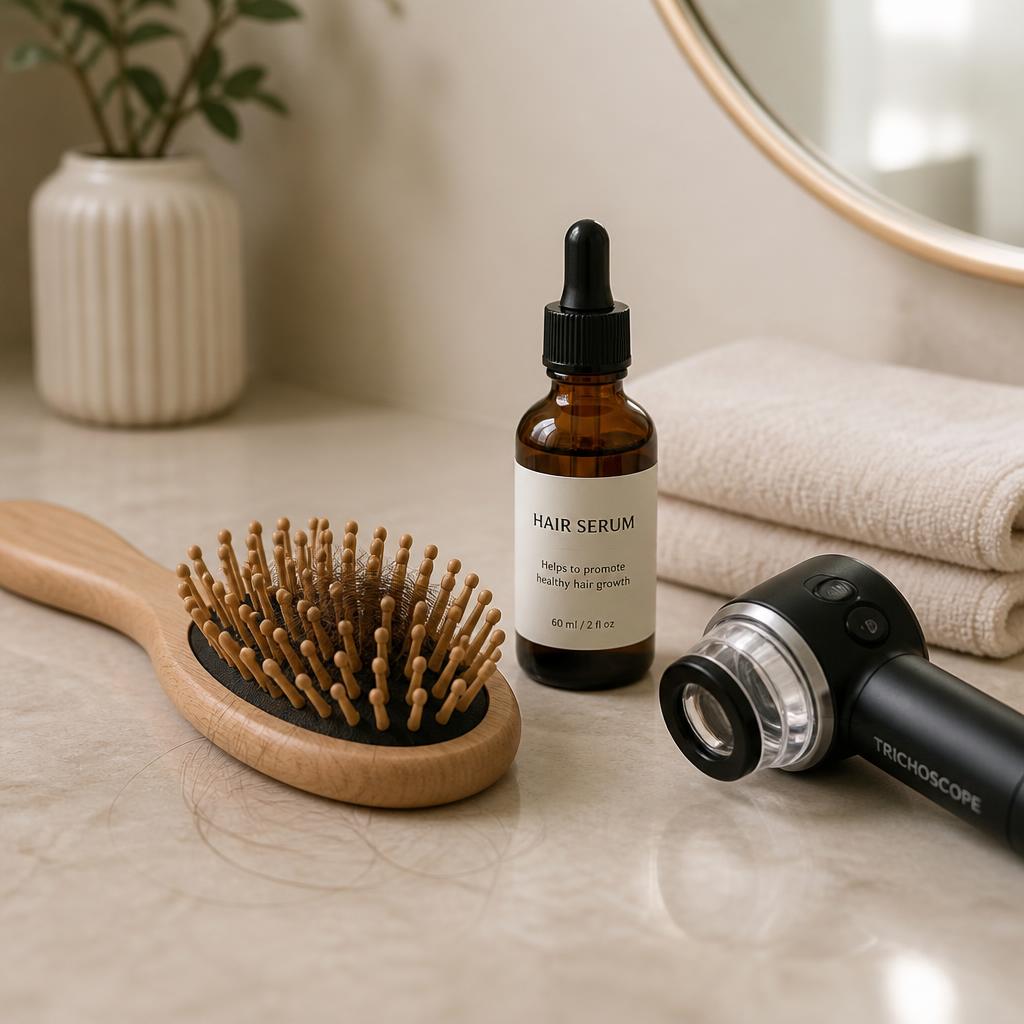
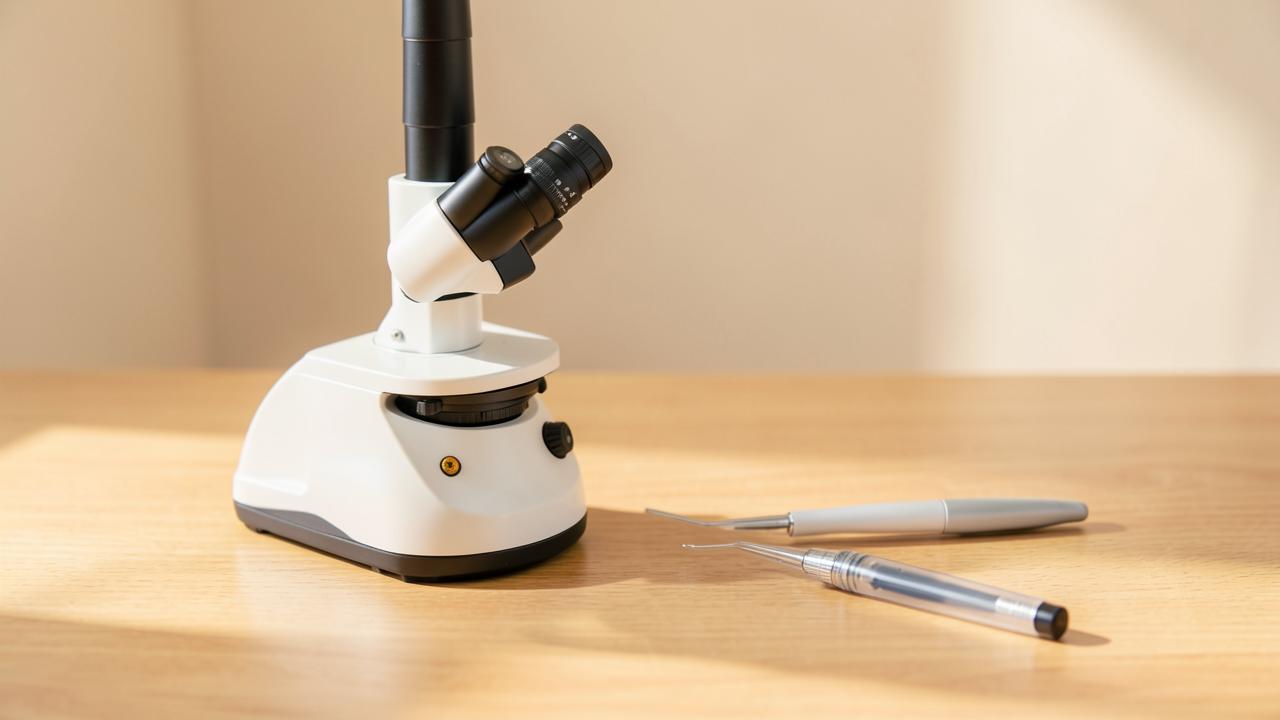
Most cases are diagnosed clinically with a scalp examination and trichoscopy, a magnified view of the scalp surface. Trichoscopy shows yellow dots, black dots, short vellus hairs and exclamation-mark hairs, a pattern that is characteristic of alopecia areata.
Blood tests are targeted, not routine. Because alopecia areata sits alongside other autoimmune conditions, thyroid function is commonly checked, and iron studies and vitamin D are checked when there are symptoms or dietary risk. Screening for coexisting vitiligo and for atopic disease such as eczema and asthma is part of the same visit [1][2].
Severity is recorded so that response can be measured. Dermatologists use the SALT score, which estimates the percentage of scalp surface without hair. A number at the first visit makes the difference between real regrowth and wishful thinking obvious at review.
What treatment looks like
For a small number of patches, intralesional corticosteroid injections into the patch are the usual first choice for adults, repeated every four to six weeks. Potent topical corticosteroids and topical minoxidil are used alongside, and topical treatment is favoured for young children [1].
For widespread disease, options include contact immunotherapy with diphenylcyclopropenone, short courses of oral corticosteroids in rapidly progressing cases, and oral immune-modulating medicines. Since 2022, oral JAK inhibitors such as baricitinib have been approved for severe alopecia areata in adults, and ritlecitinib is approved from age 12, which has changed what is realistic for patients with extensive loss [3][4].
Spontaneous regrowth happens in many patients with a single small patch, which is why some cases are simply monitored. That decision belongs to a dermatologist after examination, not to a pharmacy counter.
- Few patches: steroid injections, potent topical steroids, topical minoxidil
- Children: topical treatment first, injections avoided where possible
- Extensive or fast-moving disease: contact immunotherapy or systemic treatment
- Severe adult disease: oral JAK inhibitors under specialist supervision
- Every plan needs review at three to six months with photographs
What does not work
Garlic, onion juice, burning agents, repeated shaving of the patch and vitamin injections given without a deficiency do not switch off the immune attack. Some cause irritant dermatitis that delays real treatment.
Biotin supplements are widely sold across Iraq for hair. They help only in genuine biotin deficiency, which is rare, and high doses interfere with thyroid and cardiac blood tests, which can create false results in exactly the tests used to assess alopecia areata.
Living with it while it is treated
Alopecia areata is unpredictable. It can regrow fully, recur years later, or fluctuate. Setting that expectation at the start prevents patients from abandoning an effective plan after six weeks.
The psychological impact is real and is not vanity. Anxiety and low mood are common, particularly in adolescents and in women. Ask for support as part of the medical plan rather than separately from it.
Frequently asked questions
Will my hair grow back?
Many patients with one or two small patches regrow hair, sometimes without treatment. Wider or long-standing loss is less predictable, which is why early assessment matters.
Is alopecia areata caused by stress?
No. It is an autoimmune condition. Stress may coincide with a flare in some people, but treating stress alone does not stop the immune attack on the follicle.
Is it contagious?
No. It cannot pass between family members, in barbershops or at school. Fungal scalp infection can spread, which is one reason a patch should be examined rather than assumed.
Can it be treated online?
The first assessment is often possible by video with clear photographs of the patch and nails, and blood tests can be arranged locally. Steroid injections require an in-person visit.
References and sources
- [1] American Academy of Dermatology. Hair loss types: alopecia areata diagnosis and treatment.
- [2] British Association of Dermatologists. Alopecia areata patient information leaflet.
- [3] US Food and Drug Administration. FDA approves first systemic treatment for alopecia areata (baricitinib), 2022.
- [4] US Food and Drug Administration. FDA approves ritlecitinib for severe alopecia areata, 2023.
Step by step treatment pathway
Alopecia areata
An autoimmune, non-scarring hair loss that can regrow spontaneously or become extensive. Treatment intensity is matched to the extent, the speed of loss and the impact on the person [2].
Step 1: assessment and diagnosis
- Confirm smooth, non-scarring patches with preserved follicular openings. Scarring or follicular loss means a different diagnosis and needs a biopsy.
- Look for exclamation mark hairs and a positive hair pull test at the edge, which indicate active disease.
- Examine nails for pitting, which signals a higher chance of extensive disease.
- Record extent: patchy, ophiasis pattern, totalis or universalis, plus duration.
- Screen for thyroid disease, vitiligo, anaemia and vitamin D deficiency.
Step 2: grading severity
Limited
Under 25 percent scalp involvement, few patches.
Topical or intralesional therapy, with watchful waiting as a legitimate option.
Moderate
25 to 50 percent involvement or rapid progression.
Intralesional steroid plus adjunctive topical therapy, consider systemic treatment.
Severe
Over 50 percent, ophiasis, totalis, universalis, or eyebrow and eyelash loss.
Specialist systemic therapy assessment.
Step 3: treatment in sequence
First line
- Intralesional triamcinolone injections every 4 to 6 weeks for limited patchy disease, the best evidenced first step in adults [2].
- Potent or very potent topical corticosteroid, particularly in children who cannot tolerate injections.
- Topical minoxidil as an adjunct, not as a sole treatment.
- Explain the natural history: many limited patches regrow within a year without any treatment, and relapse is common regardless of treatment [1].
Second line
- Topical immunotherapy with diphencyprone for extensive disease, in centres that offer it.
- Short course of oral corticosteroid for rapidly progressive loss, recognising that relapse on withdrawal is frequent.
- Methotrexate or ciclosporin for extensive disease under specialist supervision.
Third line and refractory disease
- Oral JAK inhibitors (baricitinib, ritlecitinib) for severe alopecia areata in adults and adolescents where available, after tuberculosis, hepatitis and lipid screening [3].
- Wigs, hair systems, eyebrow tattooing and eyelash alternatives, which are legitimate treatment rather than giving up.
- Psychological support, since the mental health impact of alopecia areata is often greater than the visible hair loss.
- Reassess the diagnosis if hair does not regrow: tinea capitis, trichotillomania and scarring alopecias all mimic it.
Special groups
Children
Intralesional injections are usually avoided in young children. Topical steroids, minoxidil and, in extensive cases, topical immunotherapy are preferred. School support matters as much as the medicine.
Pregnancy
Most systemic options are contraindicated. Limited topical treatment or observation is usual during pregnancy.
Darker skin
Intralesional steroids can cause local depigmentation and skin thinning that is far more visible, so lower concentrations and careful technique are used.
Extensive and long standing disease
Alopecia present for more than 5 years, or totalis or universalis from childhood, responds less well to every treatment. This is discussed openly before starting.
When to investigate
- Thyroid function, full blood count, ferritin and vitamin D.
- Fungal microscopy and culture in children to exclude tinea capitis.
- Scalp biopsy where scarring alopecia is possible.
When to refer
- Rapidly progressive or extensive loss.
- Loss of eyebrows and eyelashes, or totalis and universalis.
- Severe psychological impact, or suspected scarring alopecia.
Review interval
Review at 3 months. Any treatment needs 3 to 6 months before being judged, since the hair cycle itself is slow.
Pathway sources
- [1] American Academy of Dermatology, alopecia areata resources
- [2] British Association of Dermatologists, alopecia areata guideline
- [3] US FDA, approvals of JAK inhibitors for severe alopecia areata
Updated: 2026-09-12
This pathway summarises recommended practice for education. It is not a personal prescription. Actual treatment is decided by a doctor after examination.
Need advice for your own skin?
Book a video consultation from anywhere in Iraq, or a clinic visit in Baghdad or Karbala.