Cryotherapy for warts: what Iraqi patients should know
Cryotherapy is a quick, evidence-based way to remove common and plantar warts. Here is what happens before, during and after the procedure.
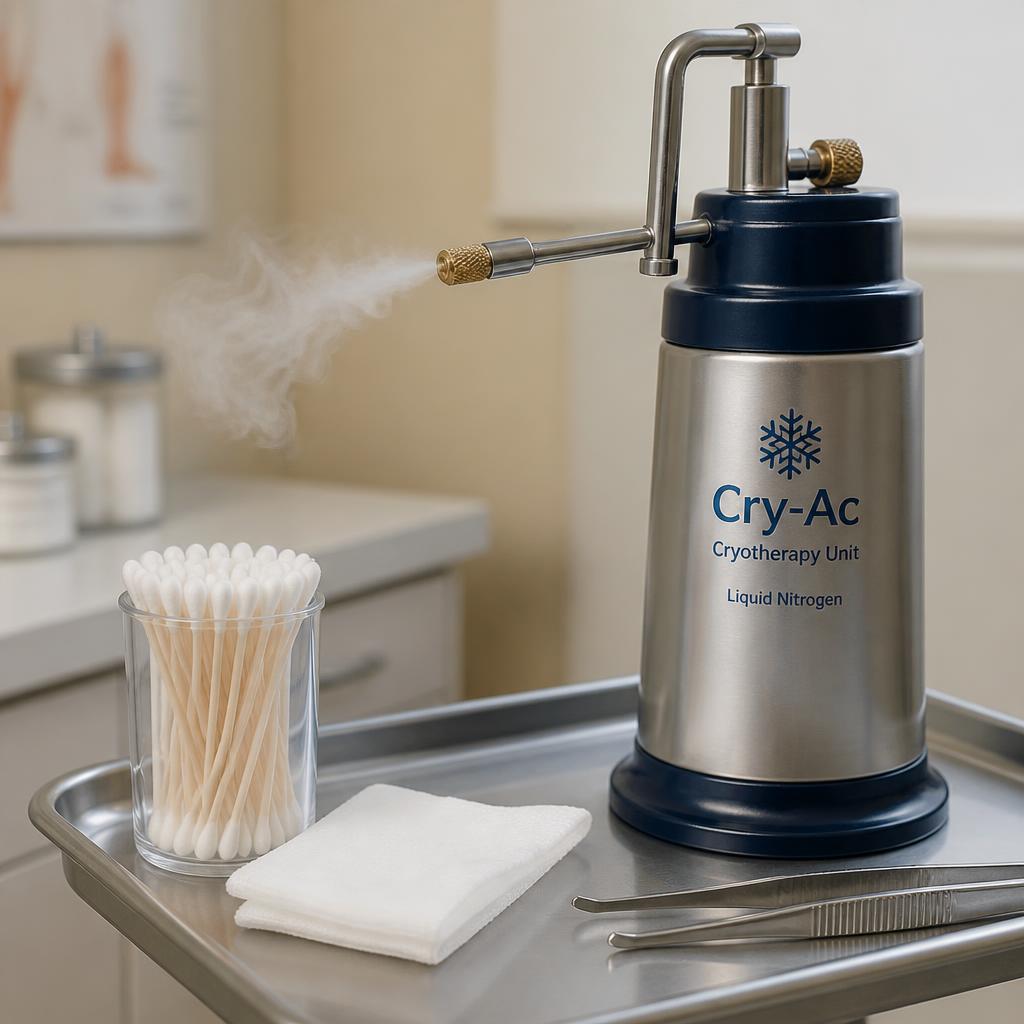
Cryotherapy is one of the most requested wart treatments in Iraqi dermatology clinics. It uses liquid nitrogen to freeze the wart and the skin immediately around it, creating a controlled injury that helps the immune system recognise and clear HPV. It is suitable for common warts, plantar warts and some other small skin lesions, and it can be done in a clinic visit without injections in most cases.
Key points
- Cryotherapy uses liquid nitrogen to freeze wart cells and trigger an immune response
- It is recommended as a first-line treatment for common warts in clinical guidelines
- Most warts need two to four sessions, two to four weeks apart
- A blister or dark scab forms and lifts off over one to two weeks
- Pigment changes are possible on darker skin, so settings are adjusted
How cryotherapy works
Liquid nitrogen is much colder than anything in a home freezer. When it touches the skin it freezes the water inside wart cells, forming ice crystals that rupture the cells. The surrounding skin becomes inflamed, which draws immune cells to the area. Those immune cells then attack the HPV-infected tissue.
This immune response is the real reason cryotherapy works. Freezing alone does not kill every virus particle; teaching the body to recognise the infection is what prevents recurrence.
Why it is a first-line choice for warts
A 2022 clinical guideline recommends cryotherapy for common warts, and a meta-analysis found liquid nitrogen cryotherapy more effective than several non-freezing treatments. It is faster than daily home acid applications, more controlled than market acids, and easier to fit into a busy schedule than lengthy home routines.
In Iraq, where patients often travel from other governorates for a clinic visit, a treatment that can be completed in minutes and repeated every two to four weeks is practical.
What happens during the appointment
The dermatologist first confirms that the lesion is a wart and not a corn, mole or other growth. The area is cleaned. A spray or cotton-tipped applicator is used to apply liquid nitrogen for a few seconds. The freeze time is shorter for face or hand warts and longer for thick plantar warts.
The sensation is intense cold, then burning or stinging that fades within minutes. Children may hold an ice pack or use numbing cream beforehand. The whole procedure usually takes less than ten minutes.
Aftercare and what to expect
A blister or dark scab usually forms within one to two days. It should be left alone. The area can be washed gently with soap and water, then patted dry. A simple plaster protects it from friction.
Over one to two weeks the wart turns darker and lifts off. If a small core remains, the next session is scheduled. Most warts need two to four sessions. Plantar warts often need more because the skin is thicker.
Risks and how they are minimised
The most common side effects are redness, swelling, blistering and temporary light or dark marks. Scarring is uncommon when the treatment is done correctly. On brown skin, the risk of pigment change is higher, so the freeze time and number of cycles are adjusted carefully.
Cryotherapy is not usually used on facial warts that sit very close to the eyes, or on patients with poor wound healing, unless the dermatologist decides the benefit outweighs the risk.
Frequently asked questions
Does cryotherapy hurt?
It feels like intense cold followed by a burning or stinging sensation that fades within minutes. Numbing cream can be used for sensitive areas or anxious children.
Can I do cryotherapy at home with an over-the-counter spray?
Over-the-counter freezing sprays are much weaker than medical liquid nitrogen and are often not cold enough to clear stubborn warts. Clinic cryotherapy is more effective and safer.
How do I know if cryotherapy is working?
The wart should darken, form a blister or scab, and then shrink or lift off between sessions. If there is no change after two sessions, the dermatologist may switch to another method.
References and sources
Need advice for your own skin?
Book a video consultation from anywhere in Iraq, or a clinic visit in Baghdad or Karbala.