
Mole checks: which spots need a dermatologist
Most moles are harmless. These are the changes that mean a mole should be examined, and what happens at a skin check.
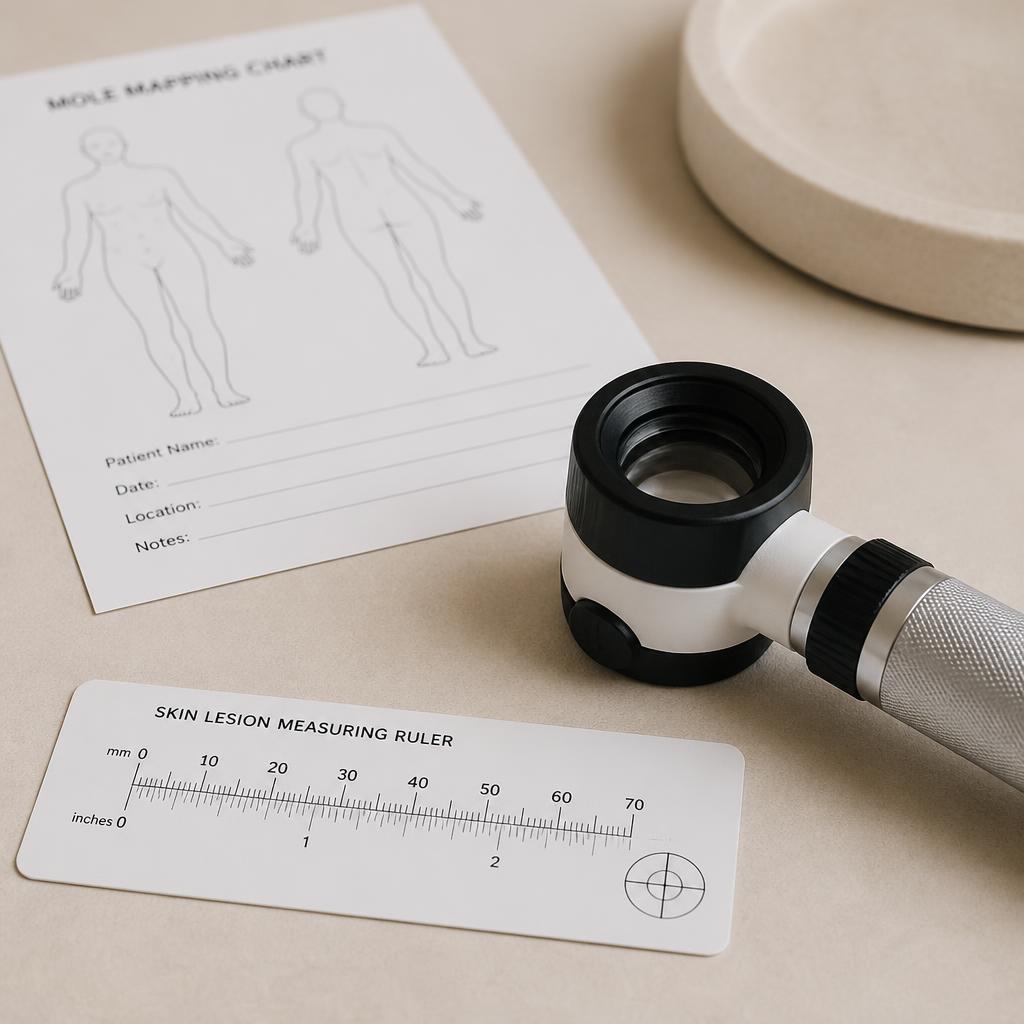
Almost every adult has moles, and almost all of them are harmless. What matters is change. A mole that behaves differently from its neighbours, or that has altered over months, deserves a proper look with a dermatoscope rather than reassurance from a photograph on the internet.
Key points
- Change over time is the most important warning sign
- A dermatoscope makes the examination far more accurate
- Non-healing sores can be skin cancer too
- Early removal gives excellent outcomes
- High risk groups benefit from periodic checks
The signs that need review
The ABCDE checklist is a useful guide for pigmented lesions, and any single feature is enough reason to book a check.
- Asymmetry: one half unlike the other
- Border: ragged, blurred or notched edges
- Colour: several shades, or new black, red or white areas
- Diameter: larger than six millimetres or growing
- Evolving: change in size, shape, colour, itch or bleeding
Other lesions worth checking
Skin cancer is not only melanoma. A pearly bump with fine vessels, a scaly patch that will not heal, or a sore that bleeds and crusts repeatedly over weeks can be basal cell or squamous cell carcinoma, and both are far more common on the face, ears, scalp and forearms of people with long sun exposure.
What a skin check involves
A full skin examination takes fifteen to twenty minutes. Each lesion of concern is examined under a dermatoscope, which reveals structures invisible to the eye and dramatically improves accuracy. Suspicious lesions are photographed for comparison or removed for laboratory confirmation.
Removal, when needed, is a short procedure under local anaesthetic. Early skin cancer removed completely has an excellent outcome, which is why delay is the main enemy.
Who should be checked regularly
People with many moles, fair skin that burns easily, a history of sunburns or outdoor work, a personal or family history of skin cancer, or long term immune suppression should have a periodic check. Everyone else should look at their own skin every few months and act on change.
Frequently asked questions
Can a mole be assessed from a photograph?
A photograph can triage urgency and identify clearly benign lesions, but any mole with concerning features needs dermatoscopic examination in person.
Is it safe to remove a mole for cosmetic reasons?
Yes when it is done by a doctor and the tissue is sent for laboratory examination. Burning or cauterising moles at beauty salons destroys the evidence needed to exclude cancer.
Need advice for your own skin?
Book a video consultation from anywhere in Iraq, or a clinic visit in Baghdad or Karbala.