Intralesional injections: targeted treatment for keloids, alopecia areata and stubborn lesions
Delivering a small dose of medicine directly into a lesion achieves what months of creams cannot, with far less systemic exposure than tablets.
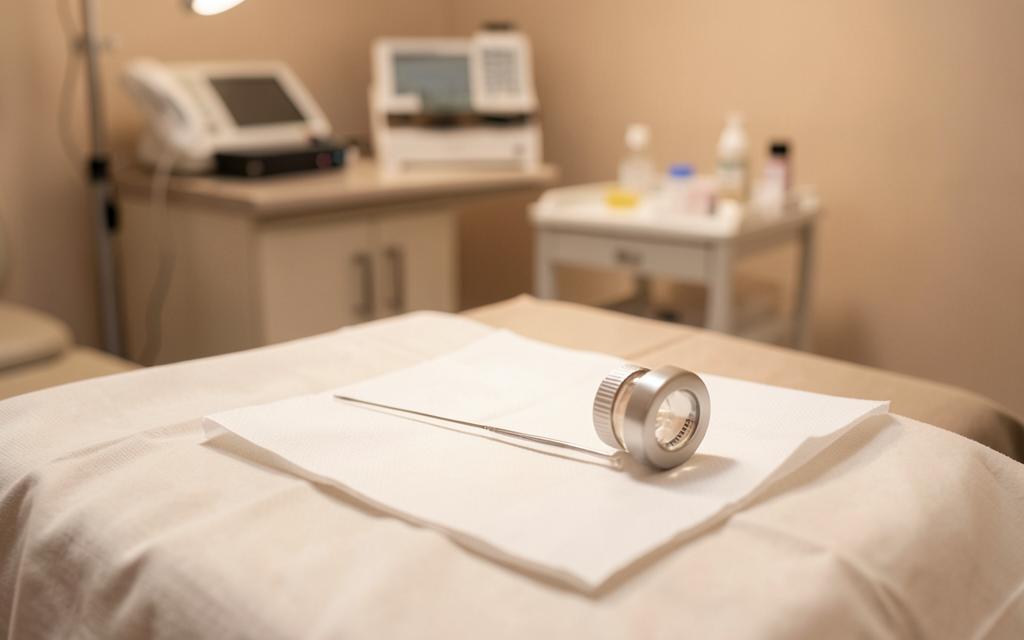
Intralesional injection places a precise dose of medicine inside a lesion rather than on it or throughout the body. Because the skin is a barrier that most topical drugs penetrate poorly, this route achieves tissue concentrations that creams cannot reach, while keeping systemic exposure minimal. It is one of the true workhorses of clinical dermatology [1].
Key points
- Triamcinolone acetonide is the most used agent, with concentration chosen by site and indication
- First line for keloids and hypertrophic scars, often combined with 5 fluorouracil or cryotherapy
- First line for patchy alopecia areata in adults
- Rapidly settles painful acne cysts before an important event or before oral therapy takes effect
- The main side effects, skin thinning and pigment loss, are dose and technique dependent
Keloids and hypertrophic scars
Keloids are an over exuberant wound healing response in which fibroblasts continue producing collagen beyond the original wound edge. Intralesional corticosteroid reduces fibroblast proliferation and collagen synthesis and increases collagen breakdown, flattening and softening the scar and, importantly, relieving itch and pain [1].
Injections are usually repeated every four to six weeks for three to six sessions. Adding 5 fluorouracil improves response and reduces the steroid dose needed, and combining with cryotherapy immediately before injection softens the tissue and improves distribution [2]. Earlobe keloids after piercing are extremely common in the region and respond well when treated early.
Alopecia areata
Alopecia areata is an autoimmune attack on the hair follicle. For limited patchy disease in adults, intralesional triamcinolone is the recommended first line treatment, with small volumes injected into the dermis across each patch every four to six weeks [3].
Regrowth typically begins within four to eight weeks. Treatment is stopped if there is no response after three or four sessions, and extensive or rapidly progressive disease is managed differently. Children are usually treated topically first because injections are poorly tolerated at that age.
Other indications
A single small injection into an inflamed acne nodule settles it within a day or two and reduces the risk of the scar that would otherwise follow. Hypertrophic lichen planus, granuloma annulare, discoid lupus, prurigo nodularis and localised psoriasis on the nails or scalp are all treated this way.
Bleomycin and antigen immunotherapy are used intralesionally for resistant warts, and antimonials for cutaneous leishmaniasis, which remains relevant in parts of Iraq and responds well to a properly performed course of intralesional therapy.
- Keloid and hypertrophic scar
- Patchy alopecia areata
- Acute inflamed acne nodule or cyst
- Prurigo nodularis, hypertrophic lichen planus, discoid lupus
- Resistant warts and cutaneous leishmaniasis with appropriate agents
Side effects and how they are avoided
Skin atrophy, a visible dent, is the commonest problem and results from too high a concentration, too large a volume or injection into the fat rather than the lesion. It usually recovers over six to twelve months. Pigment loss along lymphatic lines can follow and is more visible in darker skin, which makes concentration discipline essential in Iraqi and regional skin types.
Other effects include telangiectasia, injection pain and, with repeated large doses, systemic effects such as menstrual irregularity. Using the lowest effective concentration, injecting into the lesion plane only, and spacing sessions at least four weeks apart keeps risk low.
Frequently asked questions
How painful is it?
Keloid injections are the most uncomfortable because the tissue is dense. Cooling, a fine needle, and mixing with local anaesthetic where appropriate make it manageable, and it lasts under a minute.
Will the keloid come back?
Keloids have a recurrence tendency. Combining steroid with 5 fluorouracil, pressure therapy or silicone, and treating early, reduces recurrence considerably compared with surgery alone.
Is the dent from a previous injection permanent?
Usually not. Most steroid induced atrophy improves over six to twelve months. Persistent depressions can be corrected with filler or fat.
References
- [1] Richards RN. Update on intralesional steroid: focus on dermatoses. Journal of Cutaneous Medicine and Surgery. Source
- [2] Gold MH, Berman B, Clementoni MT, et al. Updated international clinical recommendations on scar management. Dermatologic Surgery. Source
- [3] Meah N, Wall D, York K, et al. The Alopecia Areata Consensus of Experts (ACE) study. Journal of the American Academy of Dermatology. Source
This content is general medical education and does not replace a personal consultation. Any prescription must be coordinated with your local doctor.
Is this procedure right for you?
Book a video consultation to discuss your case, or a clinic visit in Baghdad or Karbala.