Laser hair removal in brown skin: choosing the right wavelength
Hair removal works by heating pigment in the follicle. In darker skin the surrounding skin holds pigment too, so wavelength and cooling decide whether the treatment is safe.

Laser hair removal targets melanin in the hair follicle. Energy absorbed by the pigmented shaft conducts to the stem cells in the bulge and bulb, disabling the follicle. Because it depends on pigment, it works best on dark hair, does not work on white or grey hair, and must be adjusted carefully in skin that itself contains a lot of melanin [1].
Key points
- Long pulsed Nd:YAG at 1064 nanometres is the safest device for Fitzpatrick types five and six
- Diode lasers around 800 nanometres suit types three and four with good cooling
- Six to eight sessions four to eight weeks apart give substantial long term reduction
- It is permanent reduction, not permanent removal, and maintenance sessions are normal
- Unexplained facial hair in a woman needs a hormonal assessment, not just a laser
Choosing the device by skin type
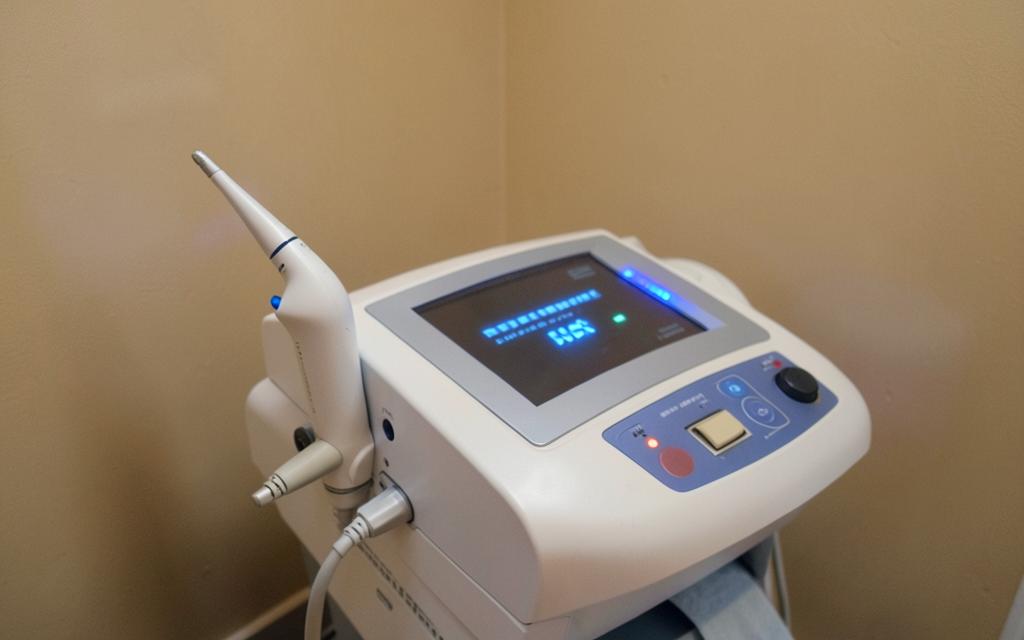
Alexandrite at 755 nanometres is highly effective and fast but is strongly absorbed by epidermal melanin, which makes it a poor choice above Fitzpatrick type four. Diode at 755 to 810 nanometres is a reasonable compromise for types three and four when contact cooling is good. Nd:YAG at 1064 nanometres penetrates deeply and is poorly absorbed by epidermal melanin, making it the standard of care for types five and six despite requiring higher fluences and being more uncomfortable [1].
Modern high frequency, low fluence diode devices deliver many low energy pulses in motion and are better tolerated, with reasonable evidence of efficacy and a good safety record in darker skin.
Hair cycles and why several sessions are needed
Only follicles in the growing anagen phase contain enough pigment and active stem cells to be destroyed. At any time only a proportion of follicles are in anagen, and that proportion varies by body site, which is why treatment is repeated at intervals matched to the local cycle.
Face and neck are treated every four weeks, body areas every six to eight weeks. Six to eight sessions typically produce a large and durable reduction, with a maintenance session once or twice a year thereafter.
- Face and neck: every four weeks
- Underarms and bikini: every five to six weeks
- Legs, back and chest: every six to eight weeks
- Shave before, never wax or thread, for four weeks prior
When hair growth is a medical sign
Hirsutism in women, meaning coarse hair in a male pattern on the face, chest or abdomen, can indicate polycystic ovary syndrome, congenital adrenal hyperplasia or, rarely, an androgen secreting tumour. Sudden onset, rapid progression, deepening voice or menstrual disturbance are red flags that require investigation before or alongside laser treatment [2].
Treating the hair without addressing the hormonal driver leads to disappointing results, because new follicles continue to be converted from fine vellus to coarse terminal hair.
Safety, pain and aftercare
Risks include burns, blistering, hypopigmentation and hyperpigmentation, particularly if the skin is tanned. A four week gap from sun exposure and self tanning products is required. Paradoxical hypertrichosis, meaning increased hair at the margins of treated areas, is uncommon but recognised, especially on the face in darker skinned women.
Discomfort is described as a hot elastic band snap. Cooling, a lower fluence with more passes and topical anaesthetic for sensitive areas all help. Afterwards expect redness and small bumps around follicles for a day, and avoid heat, saunas and exercise for twenty four hours.
Frequently asked questions
Is laser hair removal permanent?
The correct term is permanent hair reduction. Most treated follicles are destroyed, but hormonal changes can activate new ones, so occasional maintenance is normal.
Does it work on light or grey hair?
No. Without melanin in the shaft there is nothing to absorb the energy. Electrolysis remains the option for white, grey and very fine blonde hair.
Can I have it in summer in Iraq?
Yes if you can keep the treated area out of the sun before and after. Tanned skin significantly raises the burn and pigmentation risk, so many patients prefer autumn to spring.
References
- [1] Gan SD, Graber EM. Laser hair removal: a review. Dermatologic Surgery. Source
- [2] Endocrine Society clinical practice guideline on the evaluation and treatment of hirsutism in premenopausal women. Source
- [3] British Association of Dermatologists patient information leaflets. Source
This content is general medical education and does not replace a personal consultation. Any prescription must be coordinated with your local doctor.
Is this procedure right for you?
Book a video consultation to discuss your case, or a clinic visit in Baghdad or Karbala.