Radiofrequency skin tightening: what it can and cannot lift
Radiofrequency heats tissue by electrical resistance rather than light absorption, so it works the same way in every skin colour. Its honest role is mild tightening, not a facelift.
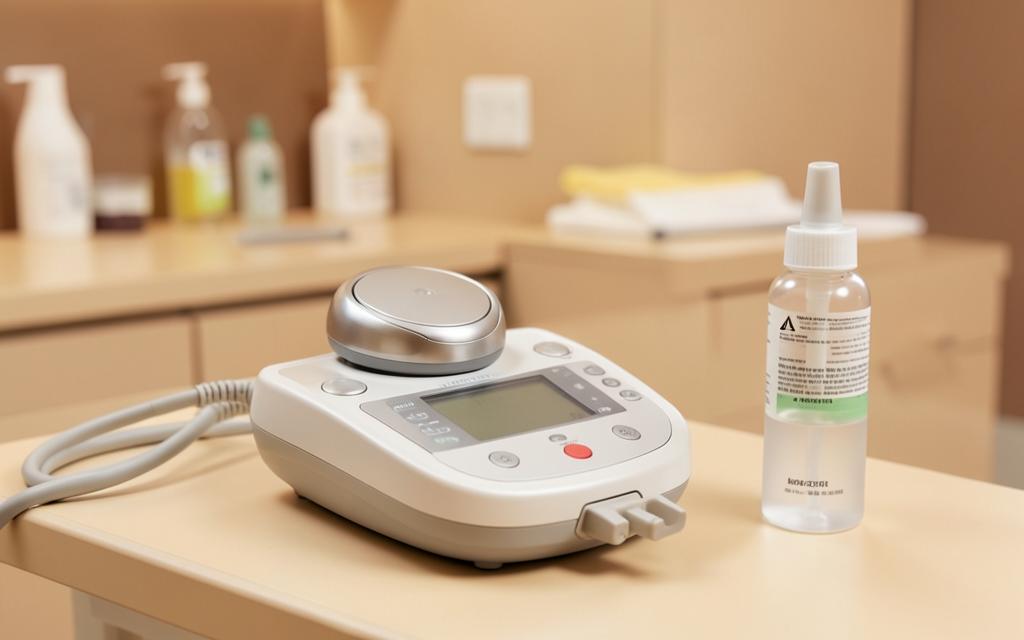
Radiofrequency devices pass an alternating current through tissue. Resistance in the dermis converts that current into heat, and heating collagen to around sixty five to seventy five degrees causes immediate fibre contraction and a delayed remodelling response over the following months [1]. Because the effect does not depend on melanin, radiofrequency is one of the few energy treatments that is essentially colour blind.
Key points
- Safe across all Fitzpatrick types because it does not target pigment
- Best suited to mild to moderate skin laxity in patients aged roughly thirty five to fifty five
- Results are subtle, developing over three to six months
- It cannot replace surgery for significant sagging
- Fat loss in the treated area is a rare but reported adverse effect
Monopolar, bipolar and microneedling RF
Monopolar devices pass current from a handpiece to a grounding pad, delivering deeper volumetric heating and generally the strongest tightening per session. Bipolar and multipolar devices pass current between electrodes on the handpiece, heating more superficially with a gentler, more comfortable treatment that usually needs a course.
Radiofrequency microneedling delivers energy through insulated needles at a set dermal depth, combining mechanical injury with focused heat. It has the best evidence for acne scarring and skin texture, and is covered separately.
Realistic outcomes
Published studies of monopolar radiofrequency report modest but measurable improvement in jawline definition, jowl contour, periorbital laxity and the upper neck, with patient satisfaction highest in those with mild laxity and good skin quality [1]. Photographs taken at six months show softening of contours rather than dramatic elevation.
A patient with heavy jowls, significant platysmal banding or substantial excess skin will not get what they want from any energy device, and an honest consultation says so rather than selling a course of treatments.
- Good candidate: mild laxity, early jowling, good general skin quality
- Poor candidate: heavy sagging, marked excess skin, very low body fat in the face
- Timeline: gradual change over three to six months
- Maintenance: once every twelve to eighteen months
The session
A coupling gel is applied and the handpiece is moved over the treatment area in passes, with the operator tracking skin temperature. Deep heat produces a warm to hot sensation with each pass, which is used as the endpoint. A full face and neck takes forty five to sixty minutes.
There is no downtime beyond transient redness and occasional mild swelling. Normal skincare and make up resume the same day.
Risks
Burns and blisters can occur if temperature is not monitored, particularly over bony areas. Localised fat atrophy producing a depression is uncommon but well described, and is more likely with aggressive settings in thin faces.
Devices are avoided over permanent fillers, over implanted electronic devices such as pacemakers, and during pregnancy. Metal implants in the treatment field require caution.
Frequently asked questions
How does it compare with HIFU?
Both aim at tightening. Focused ultrasound deposits heat in small deep points, radiofrequency heats a broader volume more superficially. Neither replaces surgery, and comfort and device quality often matter more than the modality.
Is it safe on brown skin?
Yes. It does not target melanin, so the pigmentation risks of light based devices largely do not apply.
How long do results last?
Typically twelve to eighteen months, after which maintenance is needed. Ageing continues regardless of treatment.
References
- [1] Sadick N, Rothaus KO. Aesthetic applications of radiofrequency devices. Clinics in Plastic Surgery. Source
- [2] United States Food and Drug Administration guidance on aesthetic energy based devices. Source
This content is general medical education and does not replace a personal consultation. Any prescription must be coordinated with your local doctor.
Is this procedure right for you?
Book a video consultation to discuss your case, or a clinic visit in Baghdad or Karbala.