Vascular laser: treating thread veins, port wine stains and facial redness
Vascular lasers heat blood inside a vessel until the vessel wall collapses. Choosing between pulsed dye and Nd:YAG depends on vessel size, depth and skin colour.
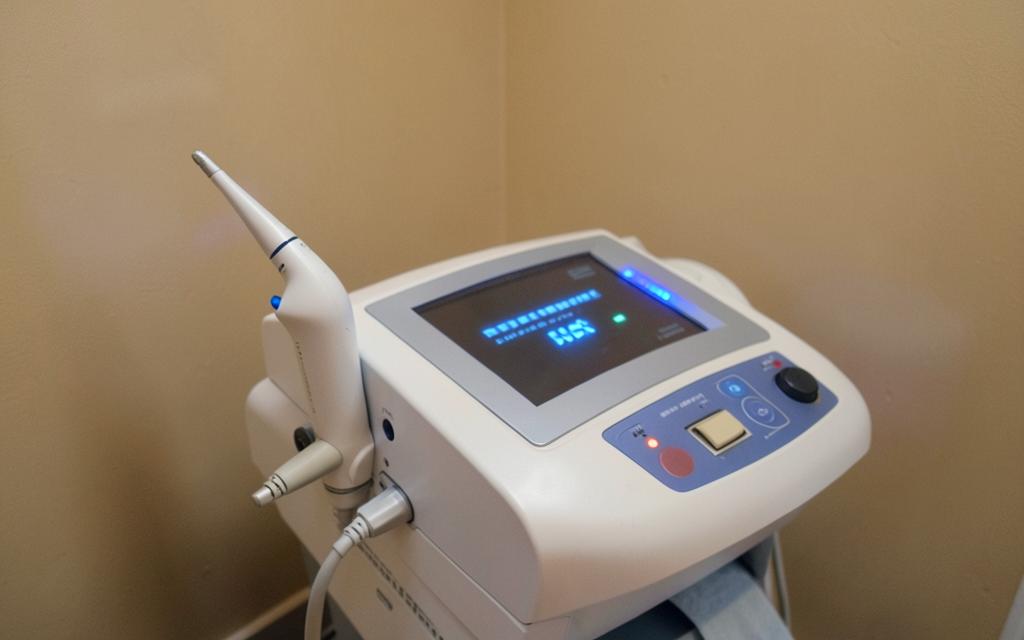
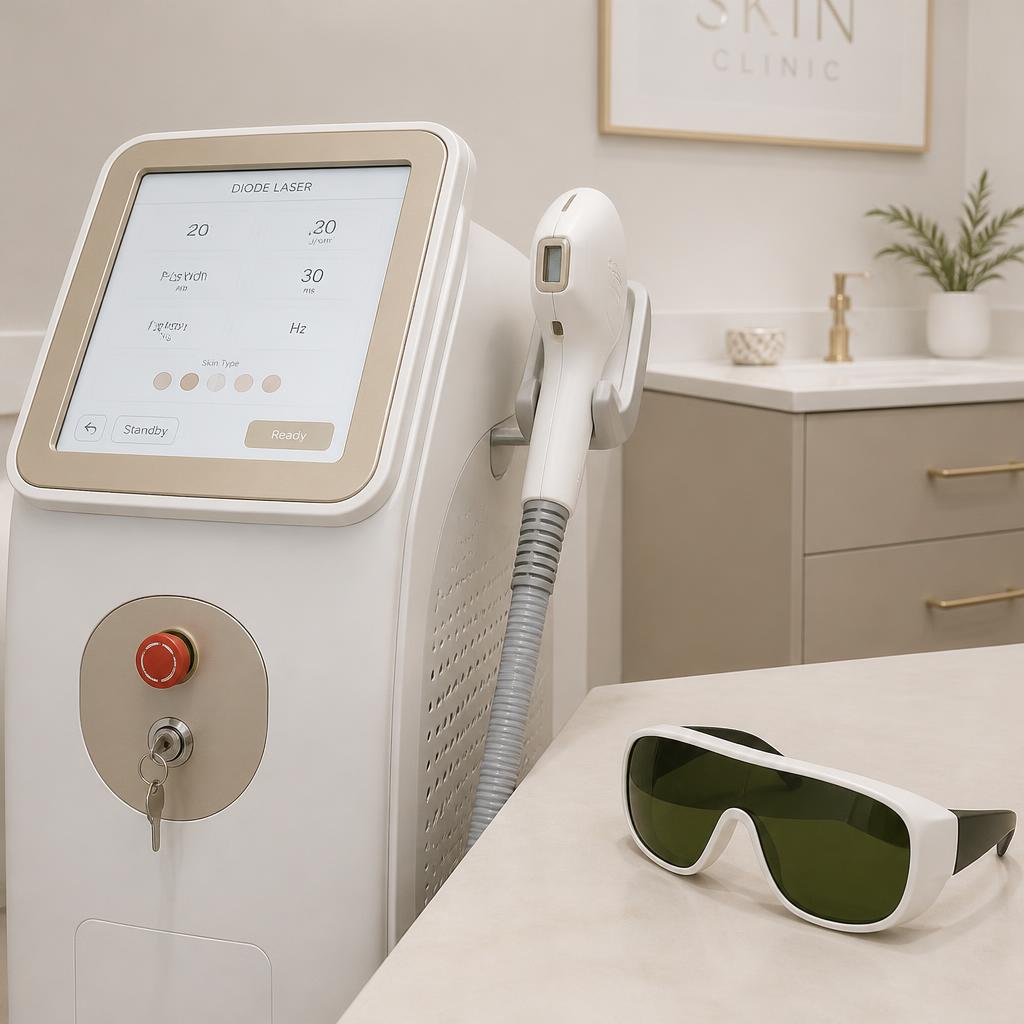
Vascular lasers exploit the absorption peaks of oxyhaemoglobin. The pulsed dye laser at 585 to 595 nanometres is the reference device for superficial vessels and vascular birthmarks, while long pulsed Nd:YAG at 1064 nanometres reaches deeper and larger vessels and is safer in pigmented skin [1].
Key points
- Pulsed dye laser is first line for port wine stains and superficial telangiectasia
- Long pulsed Nd:YAG suits deeper blue vessels and darker skin types
- Infantile haemangiomas are usually managed with propranolol, with laser as an adjunct
- Port wine stains respond best when treatment starts in early childhood
- Purpura lasting one to two weeks is expected with some pulsed dye settings
Conditions treated
Common indications include facial telangiectasia, erythematotelangiectatic rosacea, spider naevi, cherry angiomas, poikiloderma of the neck, leg thread veins and vascular birthmarks. Scars and keloids with a strong vascular component also improve with pulsed dye laser, which reduces redness and can soften the scar.
For port wine stains, repeated pulsed dye laser lightens the lesion substantially in most patients, with the best outcomes in facial lesions treated early and on the lateral face rather than the central cheek [2].
- Facial redness, rosacea and telangiectasia
- Port wine stains and other capillary malformations
- Residual redness of infantile haemangiomas
- Red and hypertrophic scars
- Leg thread veins, where Nd:YAG or sclerotherapy may be preferred
Children and vascular birthmarks
Infantile haemangiomas mostly involute without treatment, but those that ulcerate, obstruct vision or breathing, or sit in cosmetically sensitive areas need active management. Oral propranolol is the established first line therapy and has transformed outcomes. Laser is valuable for ulcerated lesions and for residual telangiectasia after involution [2].
Port wine stains do not fade. Starting pulsed dye laser in infancy, when the lesion is smaller and thinner, achieves better lightening and reduces the later thickening and nodularity that develop in adulthood. Treatment in young children is planned carefully with attention to comfort and, where needed, anaesthesia.
What a session involves
Cooling is applied by cryogen spray or contact plate. Each pulse feels like a hot snap. Small areas take minutes. With purpuric settings the treated area turns dark grey purple immediately and stays bruised for seven to fourteen days, which is expected and is associated with strong efficacy in birthmarks. Non purpuric settings for general redness produce only transient flushing.
Sessions for redness are spaced four to six weeks apart, and for port wine stains six to twelve weeks, often over many years.
Risks
Purpura, swelling, crusting, transient pigment change and, rarely, scarring or persistent hypopigmentation. The risk of pigment change is higher in darker skin, which is one reason Nd:YAG with careful cooling is often preferred in Fitzpatrick types five and six.
Treated skin must be protected from the sun and any tan must fade before treatment. A test patch is prudent for a first treatment in pigmented skin.
Frequently asked questions
Will a port wine stain disappear completely?
Substantial lightening is realistic and complete clearance is uncommon. Results depend on age at treatment, location and lesion depth, and treatment continues over years.
Is bruising unavoidable?
No. Purpuric settings bruise but are more effective for birthmarks. For general facial redness, non purpuric settings avoid visible bruising at the cost of needing more sessions.
Can babies be treated?
Yes, and early treatment of port wine stains is generally advantageous. Every case is assessed individually, including whether sedation or anaesthesia is appropriate.
References
- [1] Anderson RR, Parrish JA. Selective photothermolysis: precise microsurgery by selective absorption of pulsed radiation. Science. Source
- [2] Krowchuk DP, Frieden IJ, et al. Clinical practice guideline for the management of infantile hemangiomas. Pediatrics. Source
This content is general medical education and does not replace a personal consultation. Any prescription must be coordinated with your local doctor.
Is this procedure right for you?
Book a video consultation to discuss your case, or a clinic visit in Baghdad or Karbala.