Platelet rich plasma (PRP) in Baghdad and Karbala: hair, acne scars and realistic results
PRP uses your own concentrated platelets. The evidence is positive in hair loss and, combined with microneedling, in acne scars. For general skin rejuvenation the research is mixed.
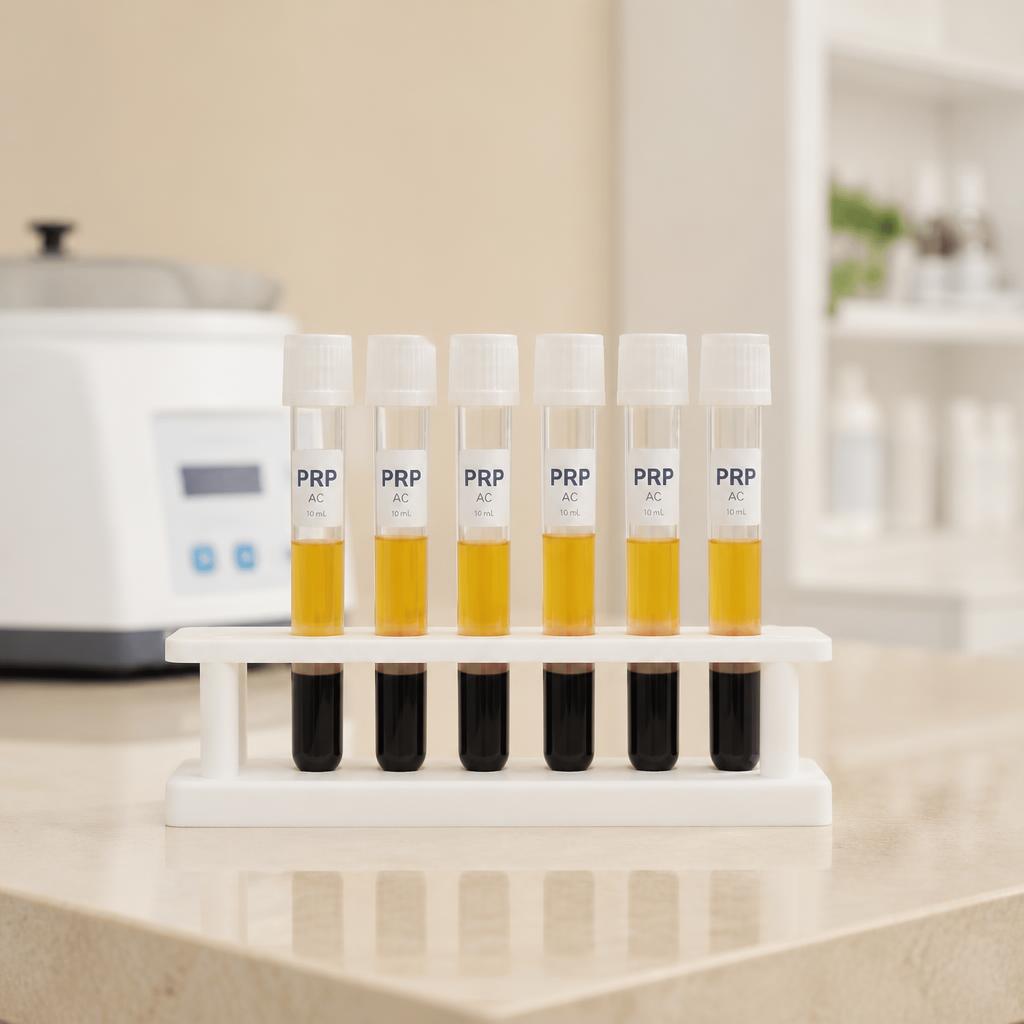
Platelet rich plasma is an autologous concentrate produced by spinning a sample of your own blood so that platelets are separated from red cells and concentrated in a small volume of plasma. Platelets store growth factors including platelet derived growth factor, transforming growth factor beta and vascular endothelial growth factor, which drive vessel formation, cell proliferation and matrix remodelling [1].
Key points
- PRP is autologous, so there is no allergy or rejection risk
- The strongest dermatology evidence is in androgenetic alopecia, where meta analyses show increased hair density versus placebo
- A standard course is three monthly sessions, then maintenance every four to six months
- Preparation method and platelet concentration vary widely between clinics and affect the result
- It is an adjunct to minoxidil and finasteride in suitable patients, not a substitute
- For acne scars, adding PRP to microneedling may give somewhat better results than microneedling alone
- For skin rejuvenation and wrinkles the research is mixed, so wrinkle reduction is not promised
How PRP is prepared
Fifteen to sixty millilitres of blood are drawn into tubes containing an anticoagulant and centrifuged, sometimes twice, to separate the platelet rich fraction. The target is a platelet concentration several times higher than whole blood. Both under concentration and extreme over concentration reduce the biological effect, so protocol consistency matters [1].
The plasma may be activated with calcium chloride before injection or left to activate on contact with tissue collagen. Because commercial kits differ in yield, leukocyte content and final volume, results published with one system do not automatically apply to another. Ask which system the clinic uses and whether the concentration is measured.
PRP for hair loss
In androgenetic alopecia, PRP is injected into the dermis across the thinning area at roughly one centimetre intervals. Systematic reviews and meta analyses of randomised trials report a statistically significant increase in hair density and diameter compared with placebo, with effect sizes that are meaningful but not transformative [2].
It works best in early to moderate thinning where follicles are miniaturised but still present. It cannot regrow hair in a completely bald scalp with no follicular openings, and in that situation transplantation is the correct discussion. Results are maintained only with repeat sessions.
- Best candidates: early to moderate androgenetic alopecia, recent shedding, good follicle density
- Poor candidates: long standing complete baldness, scarring alopecia
- Course: three sessions at monthly intervals, review at six months
- Maintenance: one session every four to six months
PRP for skin and scars
For acne scars, PRP is most often combined with microneedling. A meta-analysis of 4 randomised and 10 split face studies with 472 patients found microneedling plus PRP more effective than microneedling alone [3]. In practice, adding PRP may give somewhat better acne scar results than microneedling alone.
For general skin rejuvenation and wrinkles the evidence is weak. An overview of 13 systematic reviews, covering 28 studies of which 18 had no comparison group, concluded that the evidence was insufficient for firm conclusions [4]. Some people notice better skin quality, but research results are mixed, so we do not promise wrinkle reduction. PRP does not restore volume and is not a facelift.
Safety, discomfort and practicalities
Because the material is your own, allergic reactions do not occur. Expected effects are scalp tenderness, mild swelling of the forehead for a day, pinpoint bleeding and short lived headache. Infection is very rare with sterile technique.
PRP is avoided in platelet disorders, active infection, anticoagulant therapy where bleeding risk is high, uncontrolled systemic disease and active malignancy. Anti inflammatory painkillers are best avoided for several days before and after, since they blunt platelet function.
Setting expectations honestly
PRP slows loss and thickens existing hair more reliably than it grows new hair. Photographic standardised assessment at baseline and six months is the only fair way to judge, because day to day appearance is heavily influenced by grooming and lighting.
A patient who commits to three sessions and daily topical treatment will almost always do better than one who has six PRP sessions and no home therapy.
Frequently asked questions
Is PRP painful?
Scalp injections sting. A ring block of local anaesthetic, cold air and a fine needle make it very tolerable, and most patients return to work immediately.
How soon will I see results?
Shedding usually reduces within six to eight weeks. Visible density change is judged at four to six months, since hair grows about one centimetre a month.
Can PRP be combined with other treatments?
Yes, and it usually should be. Topical minoxidil, oral treatment where appropriate, correction of iron and vitamin D deficiency, and PRP together outperform any single measure.
References
- [1] Alves R, Grimalt R. A review of platelet rich plasma: history, biology, mechanism of action and classification. Skin Appendage Disorders. Source
- [2] Gupta AK, Carviel JL. Meta analysis of efficacy of platelet rich plasma therapy for androgenetic alopecia. Journal of Dermatological Treatment. Source
- [3] Kang C, Lu D. Combined effect of microneedling and platelet-rich plasma for the treatment of acne scars: a meta-analysis. Front Med (Lausanne). 2022;8:788754. Source
- [4] Cruciani M, Masiello F, Pati I, Pupella S, De Angelis V. Platelet rich plasma for facial rejuvenation: an overview of systematic reviews. Blood Transfus. 2024;22(5):429-440. Source
This content is general medical education and does not replace a personal consultation. Any prescription must be coordinated with your local doctor.
Is this procedure right for you?
Book a video consultation to discuss your case, or a clinic visit in Baghdad or Karbala.