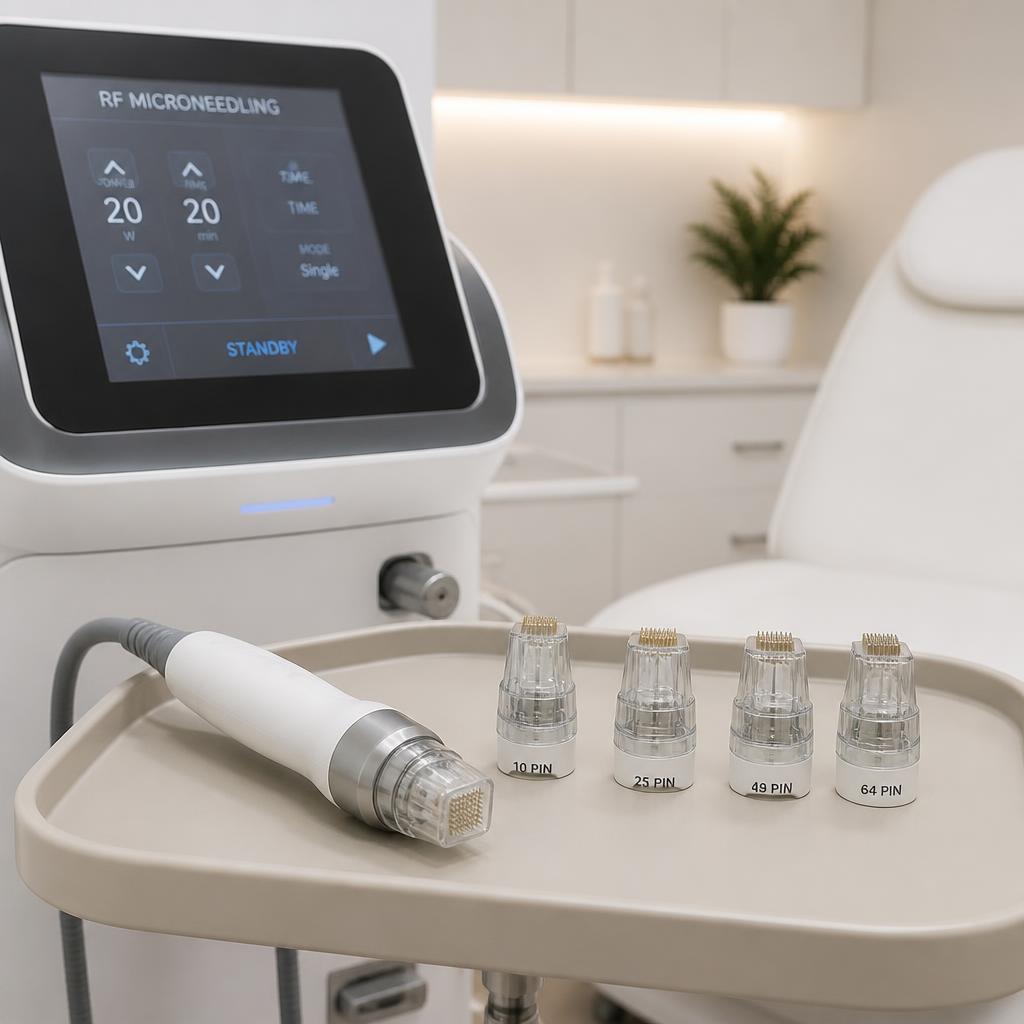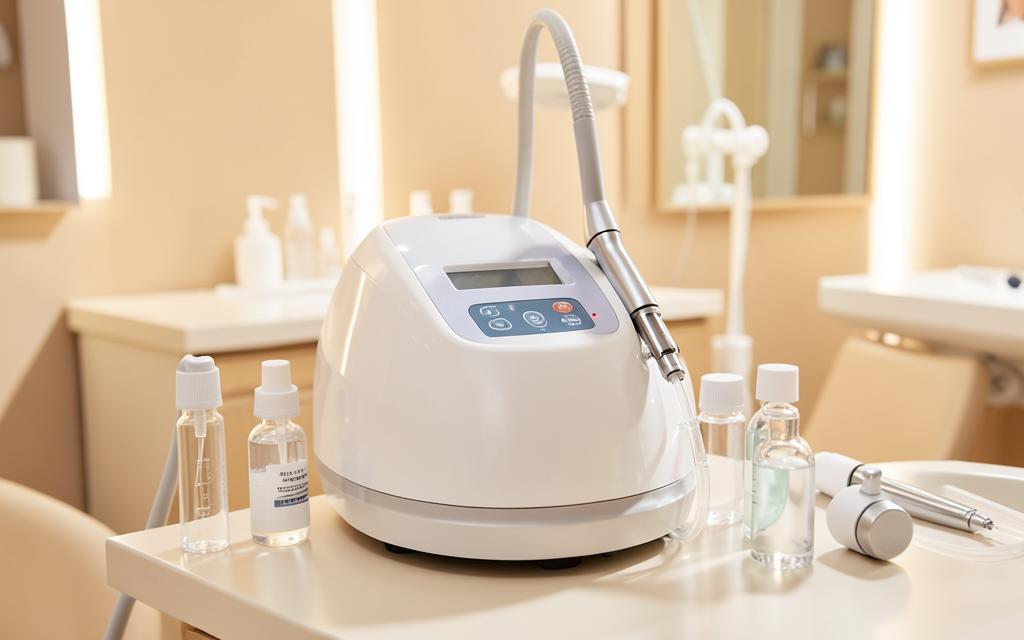
Microneedling in Baghdad and Karbala: acne scars, skin texture and support for melasma
Microneedling can improve the texture of acne scars over several sessions and suits darker skin well. For melasma it is an add-on to creams, not a treatment on its own.
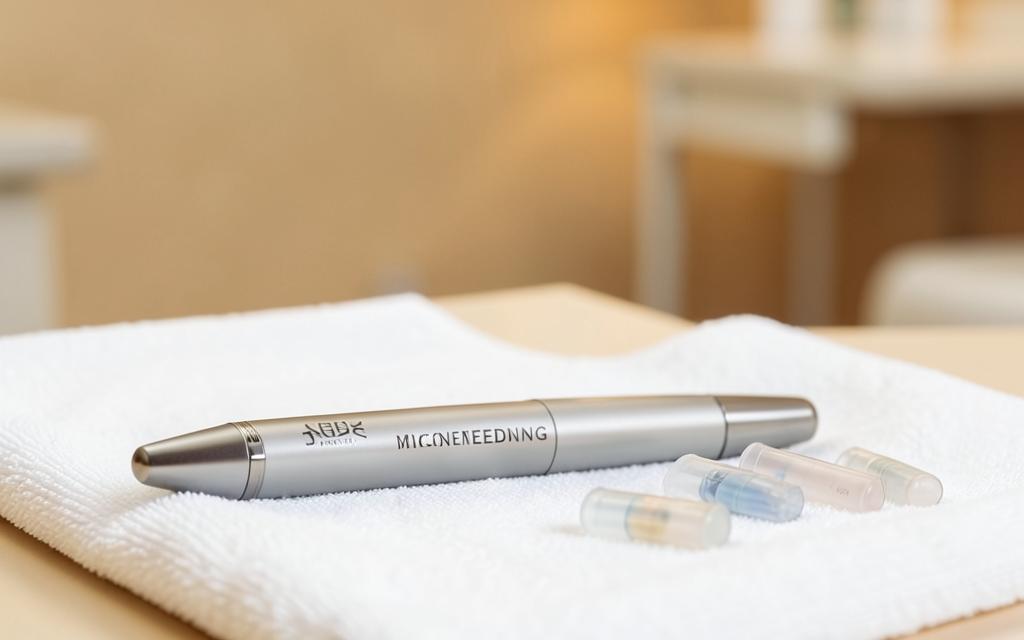
Microneedling uses very fine needles to make tiny, controlled channels in the skin, which then heals and remodels over the following weeks. Unlike ablative lasers, it leaves most of the skin surface intact. Its best evidence is for atrophic (depressed) acne scars [1]. For melasma it can be added to prescription creams [3]. This guide explains what to expect and how strong the evidence is for each use.
Key points
- A review of 9 randomised trials found microneedling effective for depressed acne scars, alone or combined with other treatments
- It can improve the texture of acne scars over several sessions
- Dark marks afterwards were rarely reported in trials, and as a non-ablative treatment it generally suits darker skin better than many lasers
- Adding PRP may give somewhat better acne scar results than microneedling alone
- For melasma it is an add-on to creams for stubborn cases, with short-term evidence only
Acne scars: the best studied use
A systematic review of 9 randomised controlled trials found microneedling effective for atrophic acne scars, either alone or combined with other treatments, with no serious side effects reported [1]. In practice that means a gradual improvement in texture over several sessions, not a single session fix. Deep, narrow "ice pick" scars usually need other techniques as well.
Adding platelet rich plasma (PRP) to microneedling may give somewhat better results. A meta-analysis of 4 randomised and 10 split face studies with 472 patients found the combination more effective than microneedling without PRP [2].
Why it suits darker skin
Darker skin can develop dark marks (post-inflammatory hyperpigmentation) after any inflammation [4]. In the trials included in the acne scar review, dark marks after microneedling were rarely reported [1]. Because microneedling leaves the skin surface largely intact, dermatologists generally consider it lower risk for dark marks in darker skin than many lasers. That comparison is accepted clinical reasoning; the review itself did not compare the two. Strict sun protection before and after treatment still matters, especially during Iraq's long, intense summers.
Melasma: an add-on, not a first treatment
Microneedling may be added to creams to help stubborn melasma. A meta-analysis of 12 studies with 459 patients found that adding microneedling to topical treatment gave a moderate extra improvement at 8 weeks and a large one at 12 to 16 weeks, with no serious side effects [3]. Follow-up was short and relapse was not studied, so melasma still needs sun protection and maintenance treatment. Our melasma and pigmentation guide explains the full plan.
Is it right for me?
Microneedling is a reasonable choice if your main concern is the texture of depressed acne scars, or if stubborn melasma has not responded to creams alone. We postpone treatment if the skin is infected or actively inflamed. At your consultation we explain the likely number of sessions, the recovery time, and what result is realistic for your scars and skin type.
Frequently asked questions
Is microneedling safe on brown skin?
It is generally a good option for darker skin. Dark marks afterwards were rarely reported in trials, and the skin surface stays largely intact. Sun protection before and after treatment is still essential.
How many sessions do acne scars need?
Improvement builds over several sessions spaced a few weeks apart. The exact number depends on the type and depth of your scars, and we review progress before each session.
Does adding PRP make a difference?
Studies suggest adding PRP to microneedling may give somewhat better acne scar results than microneedling alone. We discuss whether the extra step is worthwhile for you.
Can microneedling treat melasma?
It can be added to prescription creams for stubborn melasma, with good short-term results in studies. It does not replace creams, sunscreen or maintenance treatment.
References
- [1] Sitohang IBS, Sirait SAP, Suryanegara J. Microneedling in the treatment of atrophic scars: a systematic review of randomised controlled trials. Int Wound J. 2021;18(5):577-585. Source
- [2] Kang C, Lu D. Combined effect of microneedling and platelet-rich plasma for the treatment of acne scars: a meta-analysis. Front Med (Lausanne). 2022;8:788754. Source
- [3] Bailey AJM, Li HOY, Tan MG, Cheng W, Dover JS. Microneedling as an adjuvant to topical therapies for melasma: a systematic review and meta-analysis. J Am Acad Dermatol. 2022;86(4):797-810. Source
- [4] Davis EC, Callender VD. Postinflammatory hyperpigmentation: a review of the epidemiology, clinical features, and treatment options in skin of color. J Clin Aesthet Dermatol. 2010;3(7):20-31. Source
This content is general medical education and does not replace a personal consultation. Any prescription must be coordinated with your local doctor.
Is this procedure right for you?
Book a video consultation to discuss your case, or a clinic visit in Baghdad or Karbala.