Radiofrequency microneedling: tightening and scar remodelling in one treatment
Adding radiofrequency energy to microneedling delivers controlled heat below the surface, which tightens tissue and remodels scars more powerfully than needling alone.
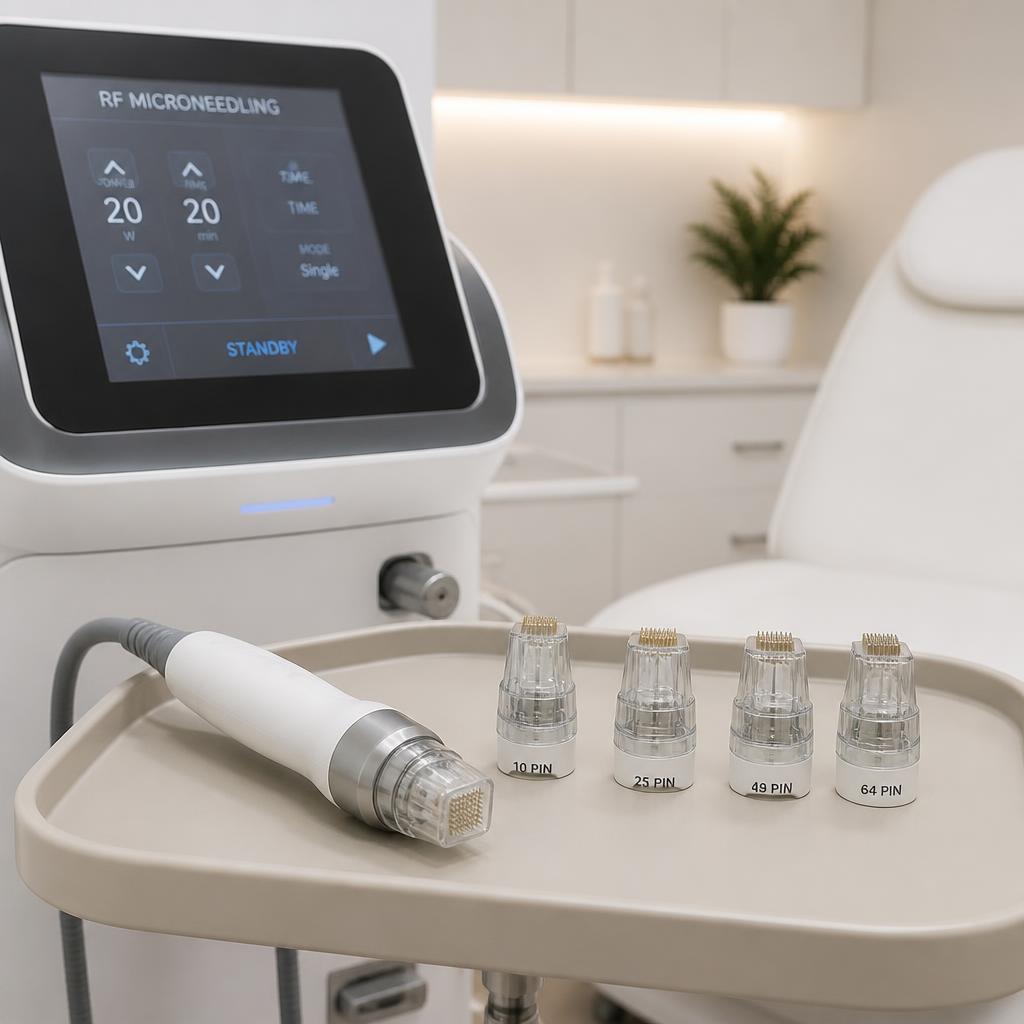
Radiofrequency microneedling combines two mechanisms. The needles create mechanical micro injury, and the radiofrequency current passing between them heats a defined volume of dermis to a temperature that denatures collagen and triggers a stronger remodelling response than needling alone [1]. Because energy is delivered from the needle tip and the shafts are usually insulated, the epidermis stays comparatively protected.
Key points
- Heat is delivered at a chosen depth, so the epidermis is spared and pigment risk stays low
- Best evidence is in atrophic acne scarring and mild to moderate skin laxity
- Typically three sessions spaced four to six weeks apart
- Collagen remodelling continues for three to six months after the final session
- Suitable for darker phototypes when settings are conservative
How it differs from plain microneedling
Plain needling relies on mechanical injury alone. Adding radiofrequency creates thermal coagulation zones in the dermis, which produce a more intense wound healing response and measurable dermal thickening. In comparative studies, radiofrequency microneedling generally outperforms needling alone for scar depth and laxity, at the cost of slightly more downtime [1].
Compared with fractional ablative laser, radiofrequency microneedling causes less epidermal damage and therefore carries a lower risk of post inflammatory hyperpigmentation, an important advantage in skin of colour.
Indications
The main uses are atrophic acne scarring, early jawline and neck laxity, enlarged pores, textural irregularity and striae. It is also used for axillary hyperhidrosis, since the same heat can ablate sweat glands at the appropriate depth, and for active acne through the effect on sebaceous glands [2].
It does not replace surgery for significant skin excess. A realistic aim in laxity is a visible refinement of the jawline and a firmer feel, not the result of a facelift.
- Atrophic acne scars, especially rolling scars
- Mild to moderate laxity of the lower face and neck
- Enlarged pores and rough texture
- Underarm sweating and active acne in selected patients
The treatment and recovery
Topical anaesthetic is applied for forty five minutes and the device is passed over the area in a grid pattern, sometimes at two or three depths in the same session. Treatment takes twenty to forty minutes for a full face.
Expect redness and a grid pattern of tiny marks for two to four days, with swelling on the first day, particularly around the eyes. Makeup is resumed after forty eight hours. Firmness improves progressively for three months.
Safety and settings
Overly aggressive energy or excessive depth on thin skin can cause tracking, prolonged redness or, rarely, scarring. Conservative settings and multiple sessions produce better outcomes than one heavy treatment.
It is avoided in patients with pacemakers or implanted electronic devices, active infection, pregnancy, keloid tendency in the area, and recent isotretinoin use depending on protocol. Metal implants in the treatment field require assessment.
Frequently asked questions
How does it compare with HIFU for tightening?
HIFU reaches deeper layers including the fascia and suits deeper support, while radiofrequency microneedling works within the dermis and also improves texture and scars. They are complementary rather than competing.
How long do results last?
Tightening effects typically last one to two years, and scar improvement is permanent. Maintenance every twelve to eighteen months is common.
Can I have it in summer?
Yes, provided you can commit to strict sun avoidance and daily sunscreen for two to three weeks afterwards. In practice many patients in Iraq prefer autumn and winter.
References
- [1] Tan MG, Jo CE, Chapas A, et al. Radiofrequency microneedling: a comprehensive and critical review. Dermatologic Surgery. Source
- [2] Kim ST, et al. Treatment of primary axillary hyperhidrosis using microneedle radiofrequency. Dermatologic Surgery. Source
This content is general medical education and does not replace a personal consultation. Any prescription must be coordinated with your local doctor.
Is this procedure right for you?
Book a video consultation to discuss your case, or a clinic visit in Baghdad or Karbala.