Hydradermabrasion facials: what they do, what they cannot do, and where they fit
A well performed hydradermabrasion facial is an excellent maintenance treatment with no downtime. It is not a treatment for acne, scars or pigmentation on its own.
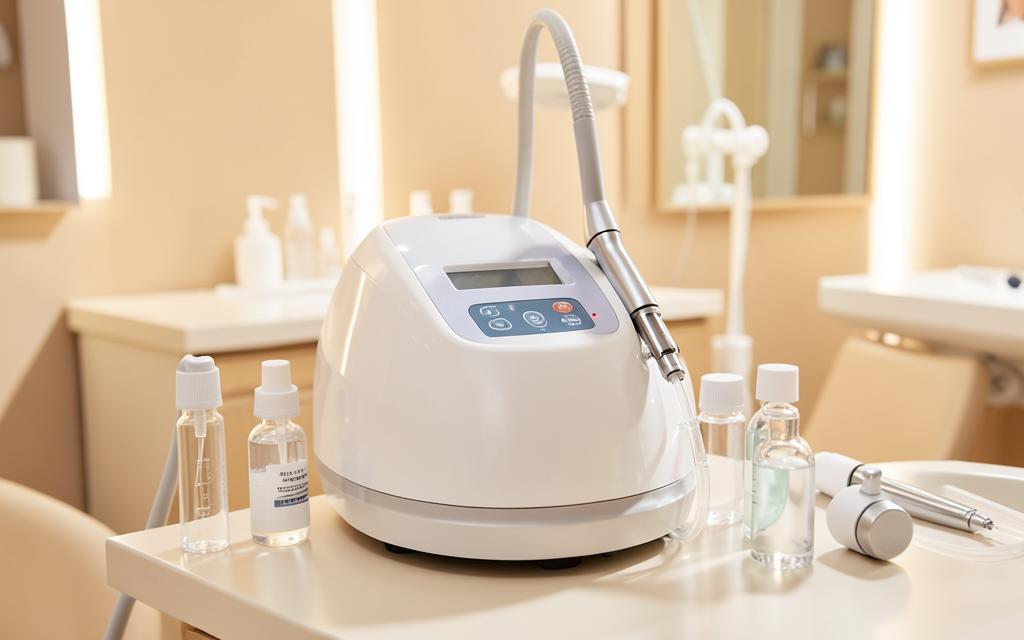
Hydradermabrasion combines gentle mechanical exfoliation, a mild acid solution and vacuum extraction in one handpiece, followed by infusion of a hydrating or antioxidant serum. The appeal is immediate: brighter, smoother skin with no downtime, which suits patients before an event. Understanding what it does at a tissue level keeps expectations sensible [1].
Key points
- It exfoliates the stratum corneum and clears follicular debris, working at a superficial level only
- Results are immediate but temporary, typically lasting two to four weeks
- It is a good adjunct to medical acne or pigmentation treatment, not a replacement
- Monthly sessions are a reasonable maintenance interval
- Not appropriate on inflamed or infected skin, active rosacea flares or open lesions
What happens during a session
The handpiece delivers a spiral flow of solution while a vacuum lifts loosened debris from the skin surface and follicular openings. Steps typically progress from a mild exfoliating solution, to a salicylic or glycolic based solution for congested areas, to extraction, and finally to serum infusion with hyaluronic acid, peptides or antioxidants.
The whole treatment takes thirty to forty five minutes, is painless, and leaves the skin pink for under an hour. Makeup can be applied the same day.
Realistic outcomes
Immediate improvement in smoothness, hydration and radiance is consistent, and blackhead reduction on the nose and chin is often visible after the first session. Published data is limited but supports improvements in hydration and superficial texture, with cumulative benefit over a course [1].
What it does not do: it does not remodel dermal collagen, does not treat atrophic scars, does not clear inflammatory acne on its own, and does not treat melasma. Patients told otherwise are being oversold.
- Good for: dull, congested, dehydrated skin and maintenance between medical treatments
- Not effective for: scars, wrinkles, melasma or moderate to severe acne
- Frequency: every four weeks, or before an event
Where it fits in a proper skin plan
The strongest results come from combining a facial programme with home treatment that has real evidence: a retinoid, daily broad spectrum sunscreen, and prescription therapy where a diagnosis such as acne, rosacea or melasma exists.
In practice a monthly hydradermabrasion alongside a medical plan keeps skin comfortable and clear looking while the slower acting treatments do the structural work.
Safety and hygiene
The main safety issues are hygiene and patient selection. Tips must be single use or fully sterilised, and the same device should never be used across inflamed acne and then healthy skin without changing consumables.
Avoid during an active herpes outbreak, on sunburned skin, over inflamed rosacea, or within a week of a chemical peel or laser treatment.
Frequently asked questions
Is it worth the money?
As maintenance and comfort, yes for many patients. As a solution for a medical skin condition, no. The money is better spent on a diagnosis and prescription plan first.
Can it shrink my pores?
It empties them, which makes them look smaller for a few weeks. Genuine pore size reduction requires retinoids, and in some cases laser or microneedling.
How soon before a wedding should I have one?
Three to five days before is ideal, and it should not be your first ever session before an important event.
References
- [1] Freedman BM. Hydradermabrasion: an innovative modality for nonablative facial rejuvenation. Journal of Cosmetic Dermatology. Source
- [2] British Association of Dermatologists patient information. Source
This content is general medical education and does not replace a personal consultation. Any prescription must be coordinated with your local doctor.
Is this procedure right for you?
Book a video consultation to discuss your case, or a clinic visit in Baghdad or Karbala.