Skin tag removal: safe in-clinic options and why home remedies go wrong
Skin tags are harmless but they catch, bleed and multiply. Removal in clinic takes minutes; removal at home is how people end up with infection and scars on the neck.
Acrochordons, commonly called skin tags, are soft benign growths on a narrow stalk that appear where skin rubs skin: neck, underarms, under the breasts, groin and eyelids. They are extremely common after the age of forty and are not contagious or cancerous. What matters clinically is that they can be a visible marker of insulin resistance, and that the wrong removal method leaves a mark far more noticeable than the tag itself [1].
Key points
- Skin tags are benign and never turn into cancer
- Multiple tags, especially with dark velvety neck skin, warrant screening for diabetes and metabolic syndrome [1]
- Snip excision, electrocautery and cryotherapy all work; the choice depends on size and site
- Removal takes minutes, usually with topical or a drop of local anaesthetic
- Anything that looks pigmented, bleeds spontaneously or grows fast is not a skin tag and needs examination
Why they form and what they can signal
Friction, obesity, pregnancy hormones and genetic tendency all contribute. The strongest medical association is with insulin resistance: several studies link multiple acrochordons with impaired glucose tolerance and type 2 diabetes, particularly when acanthosis nigricans is present as darkened velvety skin at the neck or armpits [1].
For patients in Iraq this is a useful opening. A person coming for a cosmetic neck concern may leave with a fasting glucose and HbA1c request that finds early diabetes years before symptoms. The tags themselves are cosmetic; what they hint at may not be.
Removal methods and how they are chosen
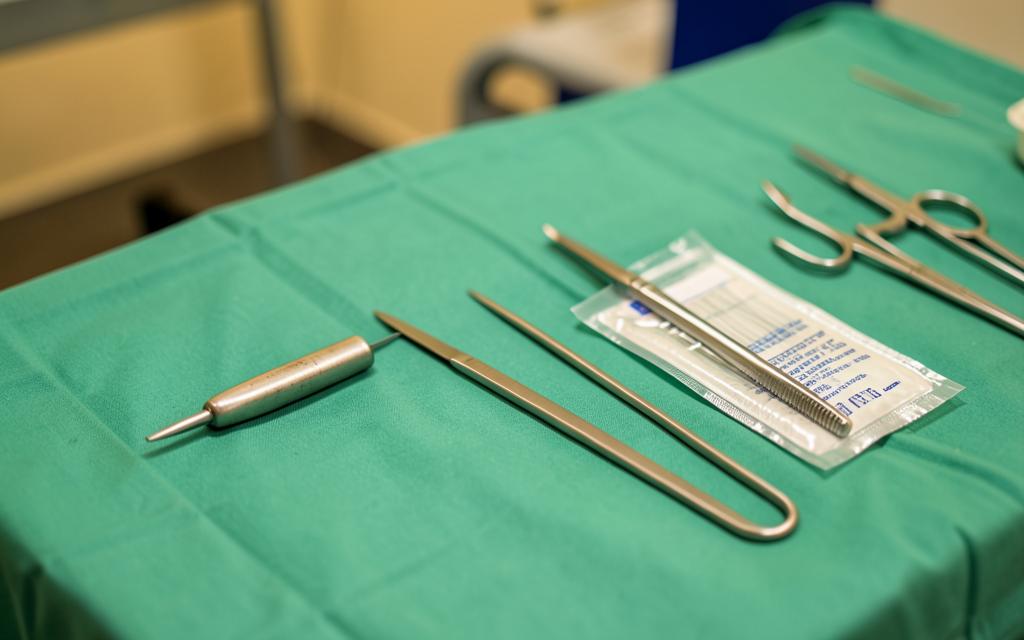
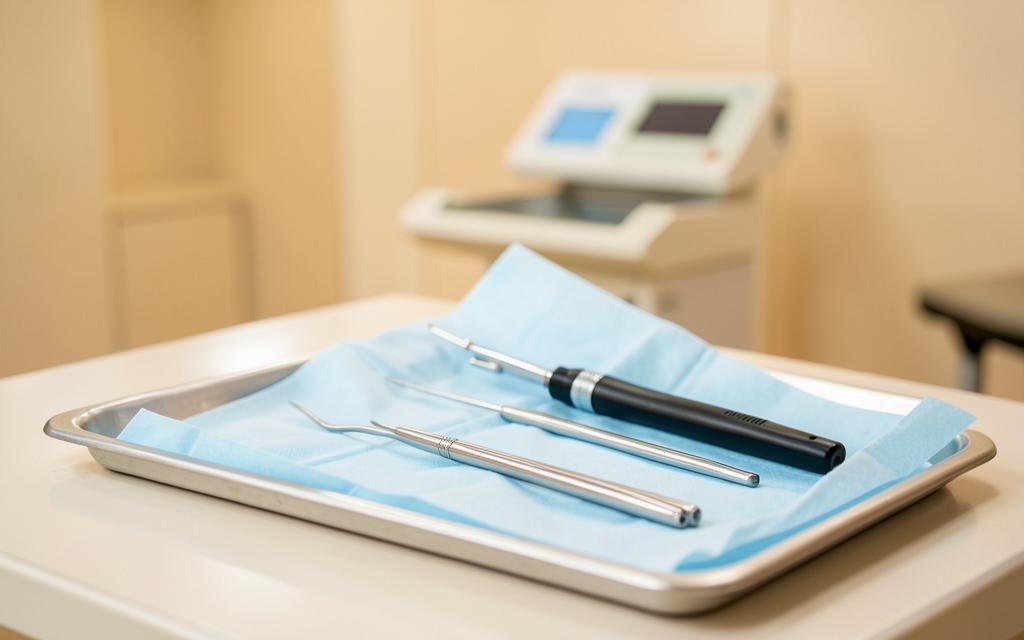
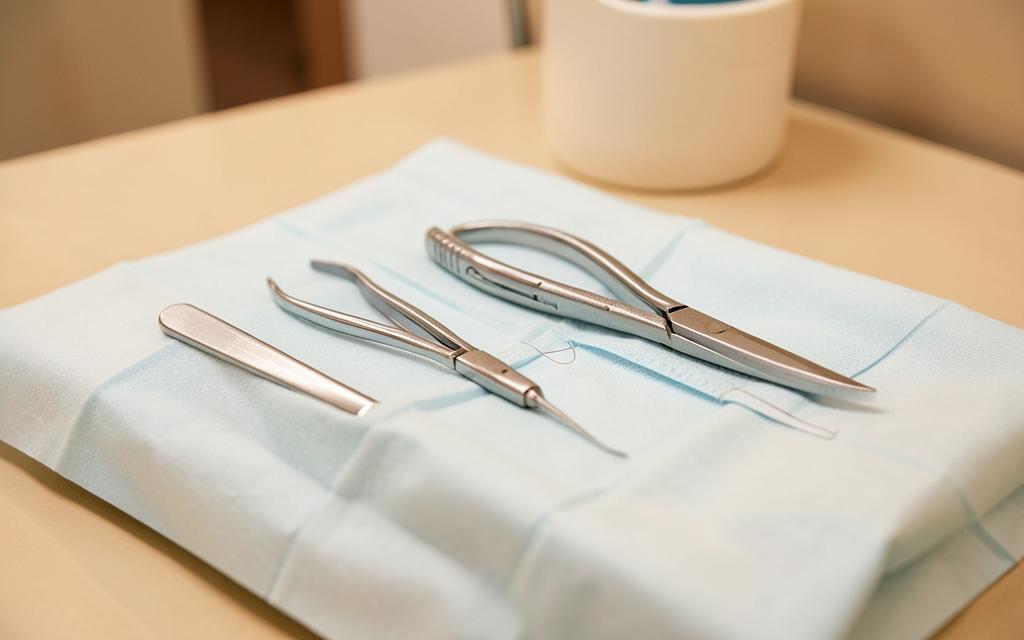
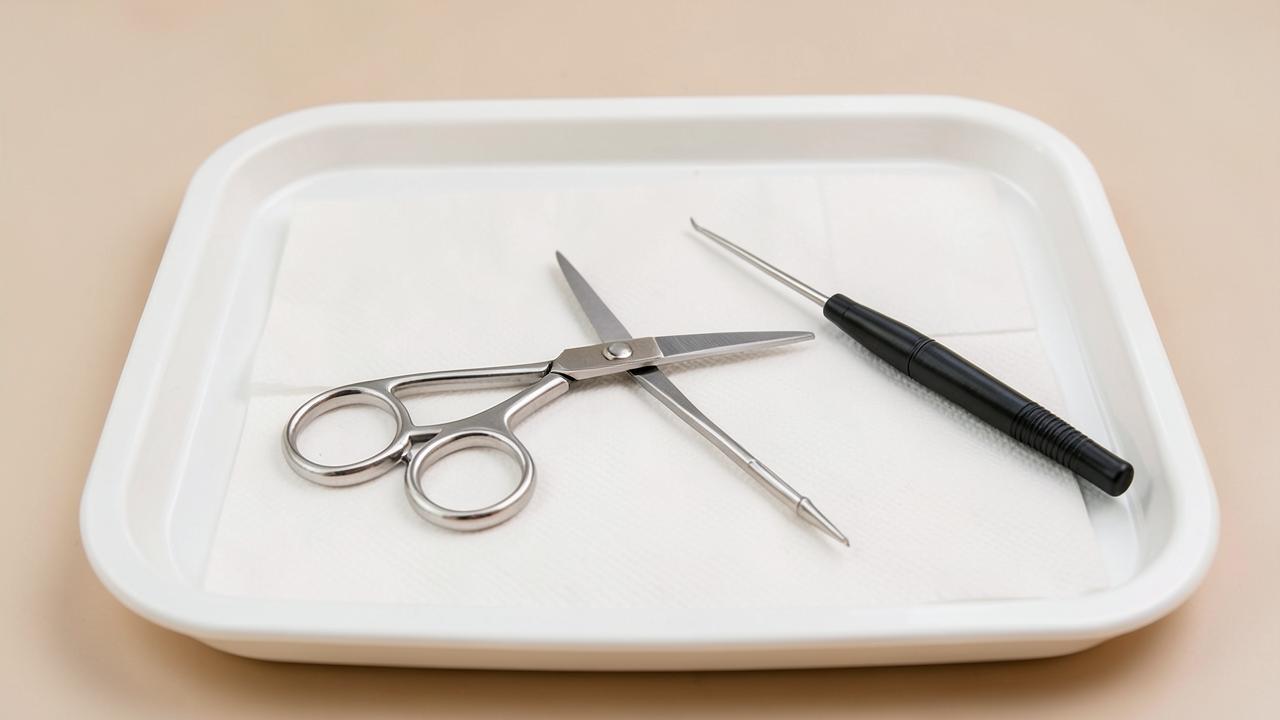
Snip excision with fine sterile scissors is the fastest method for a narrow-stalked tag and gives an immediate result with minimal marking. Electrocautery seals as it cuts and suits small tags and bleeding-prone sites. Cryotherapy with liquid nitrogen is convenient for scattered small tags but carries a higher risk of a pale patch in darker skin, so it is used selectively [2].
Larger pedunculated lesions may need a drop of injected lidocaine and a single stitch. Eyelid tags need care and a light hand near the lash line, and are best done by someone who treats that area regularly.
- Small tags, several at once: snip or fine cautery in one visit
- Eyelid margin: fine scissors under magnification
- Darker skin: prefer snip or cautery over freezing to limit pale marks
- Large or broad-based lesion: local anaesthetic, possible suture, consider histology
What to expect afterwards
Bleeding is minimal and stops within a minute or two. Small crusts form and separate over five to ten days. Keep the area clean and dry for forty eight hours, apply a thin layer of an antibiotic ointment if advised, and avoid picking the scabs since that is what creates a lasting mark.
A temporary pink or brown mark at the site is common in darker skin and generally settles over two to three months with sun protection. Tags removed do not grow back at the same point, but new ones can appear nearby if the underlying friction and metabolic factors continue.
Why home removal is a bad idea
Tying a tag with thread, cutting it with nail scissors, or applying wart acids and caustic pastes bought online are all common in the region. The results seen in clinic are infected necks, bleeding that will not stop in patients taking aspirin, chemical burns from concentrated acids, and pigmented scars that are permanent.
The more serious problem is misdiagnosis. Amelanotic melanoma, basal cell carcinoma, neurofibroma and molluscum can all be mistaken for a tag. Destroying a lesion at home removes the chance to examine it, and a lesion that is pigmented, firm, ulcerated, growing or bleeding without trauma should be seen and sometimes sent for histology [3].
Frequently asked questions
Will removing a skin tag make more appear?
No. That is a myth. New tags appear because the underlying friction and metabolic factors continue, not because of the removal.
Is it painful?
Very little. Small tags are removed after topical anaesthetic or with a fine needle of local anaesthetic, and the procedure takes seconds per lesion.
Does insurance or medical necessity apply?
Removal is usually cosmetic, but tags that catch on clothing, bleed repeatedly or become inflamed are removed as a medical problem.
Should I get a blood test?
If you have many tags, especially with darkened neck or armpit skin, a fasting glucose, HbA1c and lipid panel is a sensible check.
References
- [1] Association of multiple acrochordons with insulin resistance and type 2 diabetes. Source
- [2] Comparative studies of snip excision, electrodesiccation and cryotherapy for acrochordons. Source
- [3] American Academy of Dermatology clinical guidance on benign and malignant skin lesions. Source
This content is general medical education and does not replace a personal consultation. Any prescription must be coordinated with your local doctor.
Is this procedure right for you?
Book a video consultation to discuss your case, or a clinic visit in Baghdad or Karbala.