Rosacea: why the face keeps flushing and when to see a dermatologist
Rosacea causes repeated or constant facial redness with small bumps, visible vessels and stinging. It is controllable with the right plan and trigger awareness.
Rosacea is a common skin condition that causes repeated or persistent redness of the face. It can come with small bumps, visible blood vessels, and a burning or stinging feeling. It is not a hygiene problem and it is not simple acne. With the right treatment and trigger control, rosacea can be brought under good control [1][4].
Key points
- Repeated flushing is often the first sign of rosacea
- Fine visible blood vessels may appear on the cheeks, nose and face
- Rosacea can look like acne or an allergy, but the treatment differs
- Heat, sun, spicy food and hot drinks commonly make it worse
- Early treatment helps control redness and prevent progression [1]
Signs that should be checked for rosacea
One or more of the following features is enough reason for a dermatology assessment. Rosacea is diagnosed on the pattern of the skin, not on a single symptom.
- Repeated or constant redness of the cheeks, nose, forehead or chin
- Heat, burning or stinging in the facial skin
- Small red papules and pustules that resemble acne
- Fine blood vessels visible at the skin surface
- Redness that worsens with sun, heat or emotional stress
- Dryness, flaking and general sensitivity of the face
- Red or irritated eyes with burning or a gritty, foreign body feeling
What makes rosacea flare
Triggers differ from patient to patient, which is why keeping a short trigger diary for two weeks is more useful than any general list. These are the ones reported most often [1][6].
- Sun exposure, the single most reported trigger, so daily protection is part of treatment
- Heat, including hot weather, hot showers and sauna
- Spicy food, which sets off flushing episodes in some people
- Hot drinks such as very hot tea and coffee
- Alcohol, which increases redness in a proportion of patients
- Stress and strong emotion, which trigger sudden flushing
- Harsh or fragranced skin care, which irritates already sensitive skin
Rosacea is not the same as acne
Rosacea can look like acne because of the papules and pustules, but it is a different condition with a different treatment path. In rosacea we usually see redness concentrated in the central face, dilated vessels, a burning or stinging sensation, higher sensitivity to skin care products, and an absence of the blackheads and whiteheads typical of acne [2].
This matters practically. Treatments that suit acne, such as strong scrubs, high strength peels or aggressive topical routines, can worsen rosacea. Getting the diagnosis right is what makes the treatment work.
What a rosacea assessment involves
Diagnosis is clinical. The dermatologist examines the skin and takes a history of symptoms and triggers. In most cases no blood tests and no skin biopsy are needed [4].
- The distribution of redness across the face
- The presence of visible vessels
- The presence of papules and pustules
- Skin barrier condition, dryness and sensitivity
- Any eye symptoms linked with rosacea
- Any thickening of the skin of the nose, known as phyma
Phymatous change and why early treatment matters
In a minority of patients, long standing rosacea leads to gradual thickening of the skin, most often over the nose, called rhinophyma. It develops slowly and is more common in men [1][2].
This is one of the strongest arguments for treating rosacea early rather than waiting. Controlling inflammation over years reduces the chance of progressive skin thickening, and established phyma usually needs procedural treatment rather than creams.
How rosacea is treated
Treatment is chosen by rosacea subtype and severity, and it is usually a combination rather than a single product [1][3][6].
- Topical treatment to reduce inflammation, papules and redness
- Oral treatment for more inflammatory or resistant disease
- Daily sun protection with a formula suited to sensitive skin
- Laser and light based treatment for visible vessels and fixed redness
- Gentle skin care, a mild cleanser and moisturiser, avoiding irritant products
Can rosacea be cured
Rosacea is a chronic condition with no permanent cure at present, but symptoms and flare episodes can be reduced substantially with the right treatment [2].
The aim of care is a sequence: reduce redness and inflammation, control flares, limit triggers, and hold the improvement long term. Most patients settle into a light maintenance routine once the skin is calm.
When to see a dermatologist
If facial redness is repeated or persistent, or comes with bumps, visible vessels, burning or stinging, an assessment is worthwhile to confirm the diagnosis.
Do not assume every red face is rosacea. Seborrhoeic dermatitis, contact reactions, lupus and steroid induced facial rashes can all look similar, and each is treated differently.
Frequently asked questions
Is rosacea contagious?
No. Rosacea is not an infection and it does not pass from person to person.
Is rosacea caused by poor hygiene?
No. Rosacea has nothing to do with cleanliness. Over washing the face or using strong products usually increases irritation.
Can I use steroid creams for rosacea?
Using steroid creams on the face without medical supervision can worsen rosacea or cause a problem called steroid rosacea. They should be used only when a doctor decides they are needed.
Can rosacea affect the eyes?
Yes. Rosacea can involve the eyes with redness, burning, dryness or a gritty foreign body sensation. Eye symptoms need their own assessment.
Does rosacea go away on its own?
Symptoms can improve for periods, but rosacea tends to be chronic and relapsing. Early treatment and trigger control give the best long term result.
Can laser treat facial redness?
In selected patients, laser and light based devices help, especially for visible vessels and fixed redness. The dermatologist chooses the device according to skin type and symptoms.
References and sources
- [1] Thiboutot D, Anderson R, et al. Standard management options for rosacea: the 2019 update by the National Rosacea Society Expert Committee. J Am Acad Dermatol. 2020;82(6):1501-1510.
- [2] Gallo RL, Granstein RD, et al. Standard classification and pathophysiology of rosacea: the 2017 update by the National Rosacea Society Expert Committee. J Am Acad Dermatol. 2018;78(1):148-155.
- [3] van Zuuren EJ, Arents BWM, et al. Rosacea: new concepts in classification and treatment. Am J Clin Dermatol. 2021;22(4):457-465.
- [4] American Academy of Dermatology. Rosacea: diagnosis and treatment.
- [5] American Academy of Dermatology. Rosacea: overview, signs and symptoms.
- [6] National Rosacea Society. Standard management options for rosacea.
Step by step treatment pathway
Rosacea
Rosacea is a chronic condition that is controlled rather than cured. The pathway targets the dominant feature: flushing, papules and pustules, visible vessels, or eye involvement [1].
Step 1: assessment and diagnosis
- Identify the dominant phenotype: persistent central facial redness, inflammatory papules and pustules, telangiectasia, phymatous change, or ocular symptoms [1].
- List personal triggers: sun, heat, spicy food, hot drinks, alcohol, stress, strong topical products.
- Exclude lookalikes: seborrheic dermatitis, contact dermatitis, lupus, and steroid induced facial dermatitis.
Step 2: grading severity
Mild
Intermittent flushing with mild background redness, few or no papules.
Trigger control, gentle skin care, daily sunscreen.
Moderate
Persistent redness with inflammatory papules and pustules.
Topical treatment, add oral therapy if widespread.
Severe
Dense inflammation, phymatous thickening, or any eye involvement.
Oral therapy, device treatment, ophthalmology input where the eyes are affected.
Step 3: treatment in sequence
First line
- Daily broad spectrum sunscreen and a bland, fragrance free moisturiser. Stop scrubs, alcohol toners and strong actives.
- Topical ivermectin, metronidazole or azelaic acid for papules and pustules [2,3].
- Topical brimonidine or oxymetazoline for background redness, explaining that the effect is temporary and rebound can occur.
- A written trigger diary. This alone reduces flares for many patients.
Second line
- Low dose oral doxycycline, used for its anti-inflammatory effect rather than as an antibiotic course [3].
- Combine oral and topical treatment for widespread papulopustular disease.
- Artificial tears, lid hygiene and warm compresses for ocular rosacea.
Third line and refractory disease
- Vascular laser or intense pulsed light for fixed redness and visible vessels, which do not respond to creams.
- Low dose oral isotretinoin for resistant papulopustular disease under specialist supervision.
- Surgical or ablative laser reshaping for established rhinophyma.
- Reconsider the diagnosis if there is no response: demodex overload, lupus, or a drug eruption.
Special groups
Children
Childhood rosacea is rare and usually ocular. Persistent eye irritation with facial redness needs both dermatology and ophthalmology assessment.
Pregnancy
Azelaic acid is generally preferred. Tetracyclines and isotretinoin are contraindicated.
Darker skin
Redness is harder to see and rosacea is often missed or mistaken for acne. Look for warmth, burning, stinging and dry gritty eyes rather than visible redness.
Hot climate
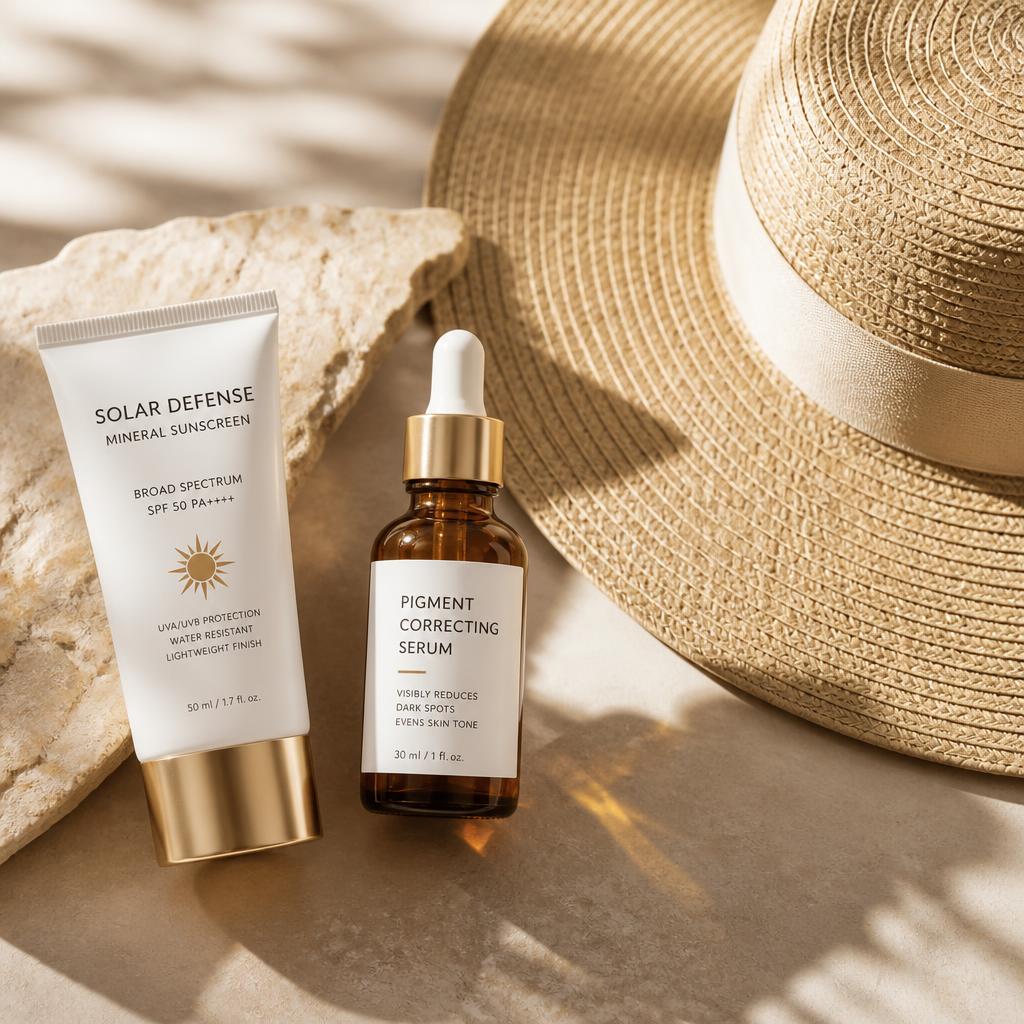
Heat and sun are the two strongest triggers in Iraq. Midday shade, a hat and a mineral sunscreen matter more than any cream.
When to investigate
- Biopsy only when lupus, sarcoidosis or a granulomatous condition is suspected.
- ANA and inflammatory markers if there are systemic symptoms or a photosensitive butterfly pattern.
When to refer
- Any eye symptoms with rosacea: refer to ophthalmology.
- Progressive phymatous change, since early treatment prevents disfigurement.
- Diagnostic uncertainty or failure of three months of correct treatment.
Review interval
Review at 8 to 12 weeks, then every 6 months once stable, since rosacea is a long term condition.
Pathway sources
- [1] National Rosacea Society, standard classification and pathophysiology of rosacea
- [2] DermNet, rosacea
- [3] Cochrane review, interventions for rosacea
Updated: 2026-09-12
This pathway summarises recommended practice for education. It is not a personal prescription. Actual treatment is decided by a doctor after examination.
Need advice for your own skin?
Book a video consultation from anywhere in Iraq, or a clinic visit in Baghdad or Karbala.