Warts in Iraq: why they spread and how a dermatologist treats them
Warts are not a sign of poor hygiene. They are caused by HPV, they spread through tiny skin breaks, and they are highly treatable when the right method is chosen.
Warts are one of the most common reasons patients visit dermatology clinics in Baghdad. A study at Al-Sadar Hospital found that warts accounted for 15.71% of all dermatology patients, with children and young adults most affected. Despite how common they are, many families still hide them, try to cut them off at home, or buy caustic acids from markets. This article explains what warts really are, why they are so common in Iraq, and the evidence-based treatments that clear them.
Key points
- Warts are caused by HPV and spread through tiny skin breaks
- Children and young adults are the most commonly affected groups in Iraq
- Home cutting, acids and garlic can cause burns and permanent dark marks
- Cryotherapy is an evidence-based first-line treatment for common and plantar warts
- Treatment needs repeated sessions and patience
What causes warts and why they are so common
Warts are caused by human papillomavirus (HPV) infecting the top layer of skin. The virus enters through tiny cuts or abrasions and triggers extra skin growth. It is not a sign of poor hygiene, and it does not come from eating certain foods.
In Iraq, heat, humidity, crowded households, walking barefoot in shared spaces, and close contact during sports or prayer all increase the chance of picking up the virus. Children are especially likely to develop warts because their immune systems are still learning to recognise HPV.
Types of warts seen most often
Common warts are rough bumps on the fingers, hands and knees. Plantar warts grow on the soles of the feet and can feel like a stone in the shoe. Flat warts are smaller, smoother and often appear on the face, neck or legs of children. Filiform warts are thread-like and grow around the mouth, nose or eyes.
Each type behaves differently. Plantar warts are pushed inward by body weight and can be painful. Flat warts on the face should be treated gently because aggressive treatment can leave dark marks, especially on brown skin.
Why warts should be treated rather than ignored
Many warts do clear on their own, but this can take months or years. During that time the virus can spread to other sites on the same person or to family members. Warts on the hands can be picked at by children, leading to infection and scarring. Plantar warts can change the way a child walks and cause long-term foot strain.
In Iraqi clinics we also see warts that have been burned with acids, cut with blades, or covered with garlic and lemon. These home remedies often cause burns, infection, and dark marks that last far longer than the wart itself.
Evidence-based treatments that work
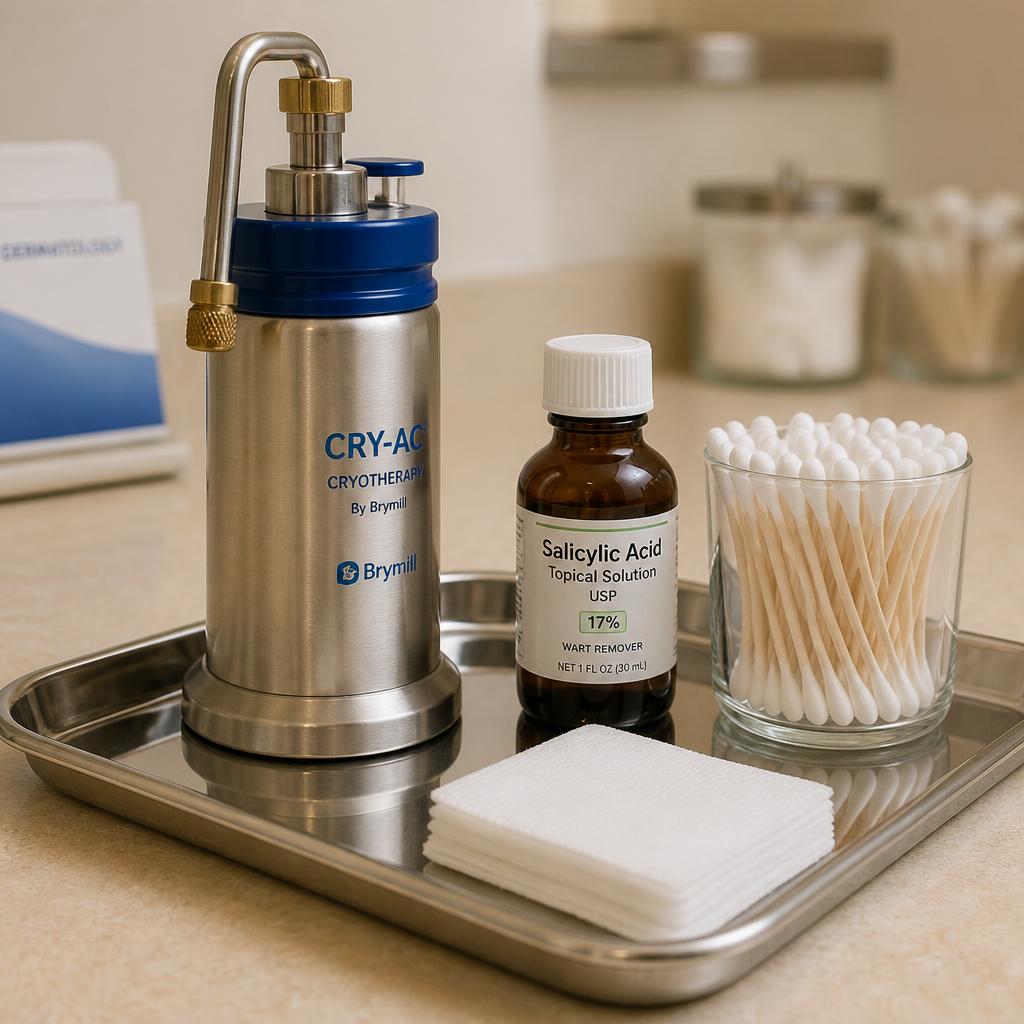
Treatment choice depends on the type, number and location of warts. A 2022 clinical guideline recommends cryotherapy for common warts, with studies showing it is more effective than several non-freezing options. Cryotherapy freezes the wart with liquid nitrogen, causing a blister that lifts the infected tissue away. It usually needs repeat sessions two to three weeks apart.
For plantar warts, cryotherapy is also suggested, although thicker skin on the sole may need more sessions. Local hyperthermia, laser and intralesional injections are reserved for stubborn or recurrent cases.
Topical salicylic acid remains a useful home option for common warts when used correctly and consistently, but it is slower than clinic treatments and should be avoided on the face or genitals.
What to expect after cryotherapy
The treated area becomes red and swollen, then a blister or scab forms over the next one to two days. The blister should not be popped. Over one to two weeks the wart darkens and separates. A small scar or lighter or darker patch can occur, especially on brown skin, which is why treatment settings are adjusted for darker skin tones.
Children may find cryotherapy briefly uncomfortable, but it is usually well tolerated. Numbing cream can be used on sensitive areas.
Frequently asked questions
Are warts contagious?
Yes, but the risk is lower than many people fear. The virus spreads through direct skin contact or shared surfaces, especially when the skin is wet or damaged. Keeping feet covered in shared spaces and not picking at warts reduces spread.
Can warts be cured permanently?
Treatment removes the visible wart, but the virus can remain dormant. Recurrence is common in the first three to six months, which is why follow-up and treating new spots early matter.
Is cryotherapy safe for children?
Yes, when performed by a dermatologist with the correct settings. It is quick, and any discomfort is brief. Settings are adjusted for skin type to reduce the risk of pigment change.
References and sources
- [1] The frequency of warts among patients attending at department of dermatology and venereology, in Al-Sadar Hospital in Baghdad, IRAQ
- [2] WHO EMRO - Prevalence of skin disorders among primary-school children in Baghdad governorate, Iraq
- [3] Clinical guideline for the diagnosis and treatment of cutaneous warts (2022)
- [4] American Academy of Dermatology - Warts: Diagnosis and treatment
Step by step treatment pathway
Warts (verruca)
Warts are a human papillomavirus infection of the skin. Treatment works by destroying infected tissue and provoking an immune response, which is why courses rather than single sessions are needed [1].
Step 1: assessment and diagnosis
- Confirm it is a wart: look for loss of skin lines across the surface and pinpoint black dots, which are thrombosed capillaries. Pare the surface if uncertain.
- Exclude corns, calluses, molluscum, seborrheic keratosis and, in a long standing single lesion on sun exposed skin in an adult, squamous cell carcinoma.
- Record the number, site and duration, plus whether the patient has diabetes, poor circulation or is immunosuppressed.
- Ask about spread within the household, since shared bathrooms and prayer areas are common transmission routes.
Step 2: grading severity
Mild
One or a few small warts, no pain.
Topical salicylic acid course, or watchful waiting in a child.
Moderate
Multiple, plantar, painful, or present over 12 months.
Cryotherapy course combined with topical treatment.
Resistant
Mosaic plantar warts, periungual warts, over 2 years duration, or immunosuppressed patient.
Combination or destructive therapy, immunotherapy, specialist input.
Step 3: treatment in sequence
First line
- Topical salicylic acid, usually 17 to 40 percent, applied daily after soaking and paring, continued for at least 12 weeks. Consistency is the main predictor of success [1].
- Occlusion with tape, which improves penetration.
- In children, explain that many warts clear spontaneously within two years, so aggressive painful treatment is not always the right first choice [2].
- Household measures: separate towels, footwear in shared washing areas, covering plantar warts, not picking or shaving over them.
Second line
- Cryotherapy with liquid nitrogen every 2 to 3 weeks, combined with continued salicylic acid between sessions, which works better than either alone [1].
- Pare plantar warts before each freeze and expect 3 to 6 sessions minimum. Warn about pain, blistering and temporary pigment change.
- Topical 5-fluorouracil or intralesional bleomycin for resistant lesions in appropriate patients.
Third line and resistant warts
- Immunotherapy: intralesional antigen injection, topical imiquimod, or contact sensitisation.
- Electrosurgery and curettage or laser ablation for isolated resistant lesions, accepting a scar risk, particularly on the sole.
- Reassess the diagnosis in any single non-healing lesion in an adult, and biopsy where carcinoma is possible [2].
- Assess immune status when warts are numerous, extensive and resistant.
Special groups
Children
Spontaneous clearance is common. Painful destructive treatment is reserved for painful, spreading or persistent warts. Cryotherapy is often poorly tolerated in young children.
Pregnancy
Salicylic acid over small areas and cryotherapy are acceptable. Bleomycin, 5-fluorouracil and podophyllotoxin are contraindicated.
Diabetes and poor circulation
Avoid aggressive destruction on the feet because of the ulceration risk. Podiatry involvement and careful wound review are essential.
Darker skin
Cryotherapy commonly causes lasting hypopigmentation, especially on the face and hands. Use shorter freeze cycles and warn patients clearly in advance.
When to investigate
- No investigation for typical warts.
- Biopsy any solitary, growing, bleeding or non-healing lesion in an adult.
- Immune assessment when warts are extensive and treatment resistant.
When to refer
- Suspicion of carcinoma in a long standing lesion.
- Facial, periungual or genital warts needing specialist technique.
- Failure of 3 to 6 months of correct treatment, or warts in an immunosuppressed patient.
Review interval
Review at 12 weeks on topical treatment, or every 2 to 3 weeks during a cryotherapy course. A full course commonly takes 3 to 6 months.
Pathway sources
- [1] Cochrane review, topical treatments for cutaneous warts
- [2] DermNet, viral warts
- [3] American Academy of Dermatology, warts
Updated: 2026-09-12
This pathway summarises recommended practice for education. It is not a personal prescription. Actual treatment is decided by a doctor after examination.
Need advice for your own skin?
Book a video consultation from anywhere in Iraq, or a clinic visit in Baghdad or Karbala.