Mesotherapy and skin boosters in Baghdad and Karbala: what the evidence does and does not support
Mesotherapy covers everything from licensed hyaluronic acid skin boosters to unlabelled vitamin cocktails. The evidence is limited, so claims should be modest and the exact product should always be named.
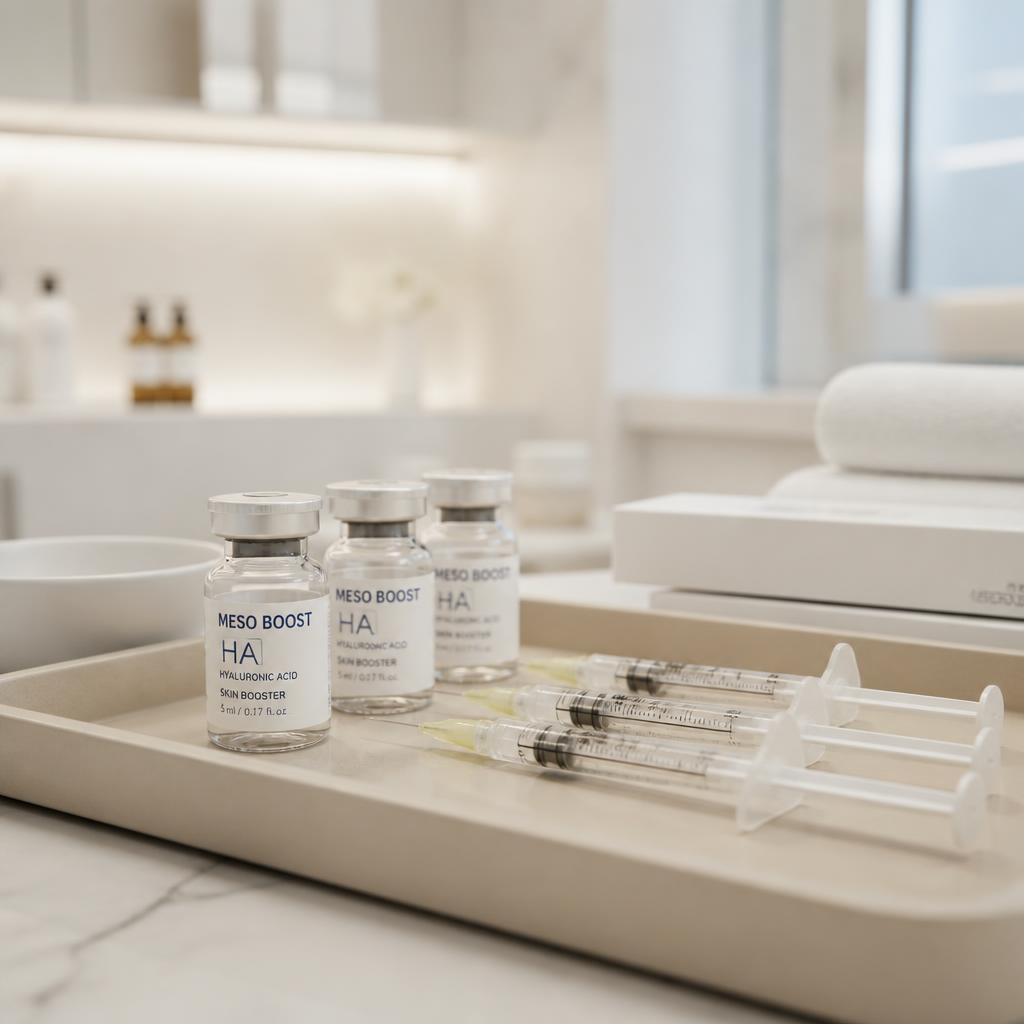
Mesotherapy means injecting small amounts of a substance into the skin with very fine needles. The word covers very different products, from licensed hyaluronic acid "skin boosters" to mixtures of vitamins and extracts prepared in the clinic. In 2014 France's national health authority (HAS) reviewed aesthetic mesotherapy and found no positive clinical evidence in the published research. It also documented risks, mainly infection, including infection with atypical mycobacteria, as well as risks from products that are not standardised [1]. More recent commentary still describes the evidence as inconsistent and inadequate [2].
Key points
- France's health authority (HAS, 2014) found no positive clinical evidence for aesthetic mesotherapy and documented infection risks
- A 2026 expert consensus sets standards for safe practice, but the evidence for cosmetic and rejuvenation claims is still limited
- Licensed hyaluronic acid skin boosters have a little more data and may improve hydration and glow for a few months
- Unlicensed "vitamin cocktails" are not offered
- Always ask for the exact product name and whether it is licensed for injection into the skin
- Mesotherapy never replaces treatment of a skin condition such as melasma, acne or hair loss
What the evidence says
The 2014 HAS review concluded that the published literature did not provide positive clinical evidence for aesthetic mesotherapy, and that the practice mainly carries a risk of infection. The review was commissioned after a cluster of skin infections with atypical mycobacteria linked to mesotherapy [1]. It also highlighted risks from the injected substances themselves, because the products and mixtures used are not standardised [1].
Later commentary on facial mesotherapy still describes the evidence of its effect as inconsistent and inadequate [2]. For that reason we describe mesotherapy modestly, and we do not present it as a cure for any skin disease.
The technique itself, small injections of a medicine into the skin, is recognised. A 2026 consensus statement written by the Italian Society of Mesotherapy (49 recommendations agreed through a structured expert process) sets out standards for practice and safety: a medical diagnosis first, products that are made for injection (anything else is off-label), sterile technique, and recording any side effects. Its main clinical recommendation concerns localised pain, not cosmetic use. Its authors also note that most of the evidence comes from expert consensus rather than large, long-term randomised trials, and that infections after aesthetic mesotherapy in unregulated settings are a known problem [4]. So it supports careful practice, but it does not change the conclusion that the evidence for cosmetic and rejuvenation claims is limited [1].
One medical use has more data: melasma. A 2022 review of 33 studies, most of them using tranexamic acid injected into the skin, concluded that mesotherapy can be an alternative or add-on treatment, and that larger studies are needed to settle the right concentrations and intervals between sessions [5]. That belongs inside a melasma treatment plan, alongside prescription creams and sunscreen, not in a beauty course.
Hyaluronic acid skin boosters: the part with some data
Licensed hyaluronic acid skin boosters are the best studied form of mesotherapy, though data are still scarce. In one randomised split face study in 55 women, a non-cross-linked hyaluronic acid mesotherapy product improved skin elasticity and radiance compared with saline [3]. A fair way to describe a licensed skin booster is that it may improve hydration and glow for a few months. It does not add volume, lift or tighten the skin.
Vitamin and "cocktail" mesotherapy
Mixtures of vitamins, amino acids, plant extracts and other agents prepared in the clinic are not standardised, and their safety and effect are not established [1]. We do not offer unlicensed cocktails. If a clinic cannot tell you exactly what is in the syringe and whether it is licensed for injection into the skin, that is a reason to decline.
Scalp mesotherapy for hair
Scalp injections are sometimes offered for thinning hair. This guide does not cover their evidence, and they are never a substitute for finding the cause of hair loss and using proven treatments. Our hair loss article and PRP guide explain the options with stronger evidence.
If you choose a skin booster
Have realistic expectations and make sure the basics are in place.
- Ask for the product name and its licence for injection into the skin
- Expect a modest effect on hydration and glow that lasts a few months, not a change in volume or wrinkles
- Treatment should use sterile, single use needles and careful skin cleansing
- Treatment is postponed if the skin is infected or inflamed
Frequently asked questions
Is mesotherapy the same as a skin booster?
Not quite. A skin booster is a specific licensed hyaluronic acid product. Mesotherapy is a broader technique that can involve anything from those products to unregulated mixtures, which is why the product name matters.
How long do skin booster results last?
A licensed hyaluronic acid skin booster may improve hydration and glow for a few months. It does not add volume or remove wrinkles.
Are vitamin injections for the face safe?
Their safety and benefit are not established, and France's health authority documented infection risks with aesthetic mesotherapy. We do not offer unlicensed vitamin cocktails.
References
- [1] Haute Autorite de Sante (HAS, France). Assessment of the risks associated with aesthetic mesotherapy practices. June 2014. Source
- [2] Nazem S, Mohammadnejad A. Depth of treatment in the facial rejuvenation: the neglected point in facial mesotherapy. J Plast Reconstr Surg. 2023;2(1):34-36. Source
- [3] Baspeyras M, Rouvrais C, Liegard L, et al. Clinical and biometrological efficacy of a hyaluronic acid-based mesotherapy product: a randomised controlled study. Arch Dermatol Res. 2013;305(8):673-682. Source
- [4] Mammucari M, Russo D, Maggiori E, et al. Consensus statement on mesotherapy for clinical and regulatory practice. Rheumatol Int. 2026;46(2):39. Source
- [5] Khalili M, Amiri R, Iranmanesh B, Zartab H, Aflatoonian M. Safety and efficacy of mesotherapy in the treatment of melasma: a review article. J Cosmet Dermatol. 2022;21(1):118-129. Source
This content is general medical education and does not replace a personal consultation. Any prescription must be coordinated with your local doctor.
Is this procedure right for you?
Book a video consultation to discuss your case, or a clinic visit in Baghdad or Karbala.