Narrowband UVB phototherapy for psoriasis, vitiligo and eczema
Narrowband UVB is one of the most effective and best studied treatments in dermatology, and for many patients it is safer than long term systemic therapy.
Narrowband ultraviolet B emits a narrow peak around 311 nanometres, the wavelength range with the best ratio of therapeutic effect to burning. It suppresses cutaneous T cell activity, alters cytokine production and, in vitiligo, stimulates melanocyte migration from hair follicles into depigmented skin [1].
Key points
- First line phototherapy for moderate plaque psoriasis and for generalised vitiligo
- Given two or three times a week, with dose increased gradually
- Psoriasis usually responds within twenty to thirty sessions
- Vitiligo requires patience, with a minimum trial of three to six months
- Long term skin cancer risk with narrowband UVB appears low compared with PUVA
Conditions treated
Chronic plaque psoriasis is the classic indication and responds well when disease is too extensive for topicals but systemic therapy is not yet warranted. Vitiligo is the second major indication, with narrowband UVB recognised as the treatment of choice for generalised disease [2]. Atopic eczema, lichen planus, pruritus of renal disease, mycosis fungoides in early stages and polymorphic light eruption are also treated.
Phototherapy is particularly valuable for patients who cannot take systemic immunosuppression, including some pregnant patients and children, since narrowband UVB has no systemic immunosuppressive effect.
- Plaque psoriasis: twenty to thirty sessions for clearance in most responders
- Vitiligo: minimum three months before judging, often twelve months or more for full repigmentation
- Atopic eczema: useful maintenance option in chronic disease
- Early mycosis fungoides: response in a majority of patients
How treatment is delivered
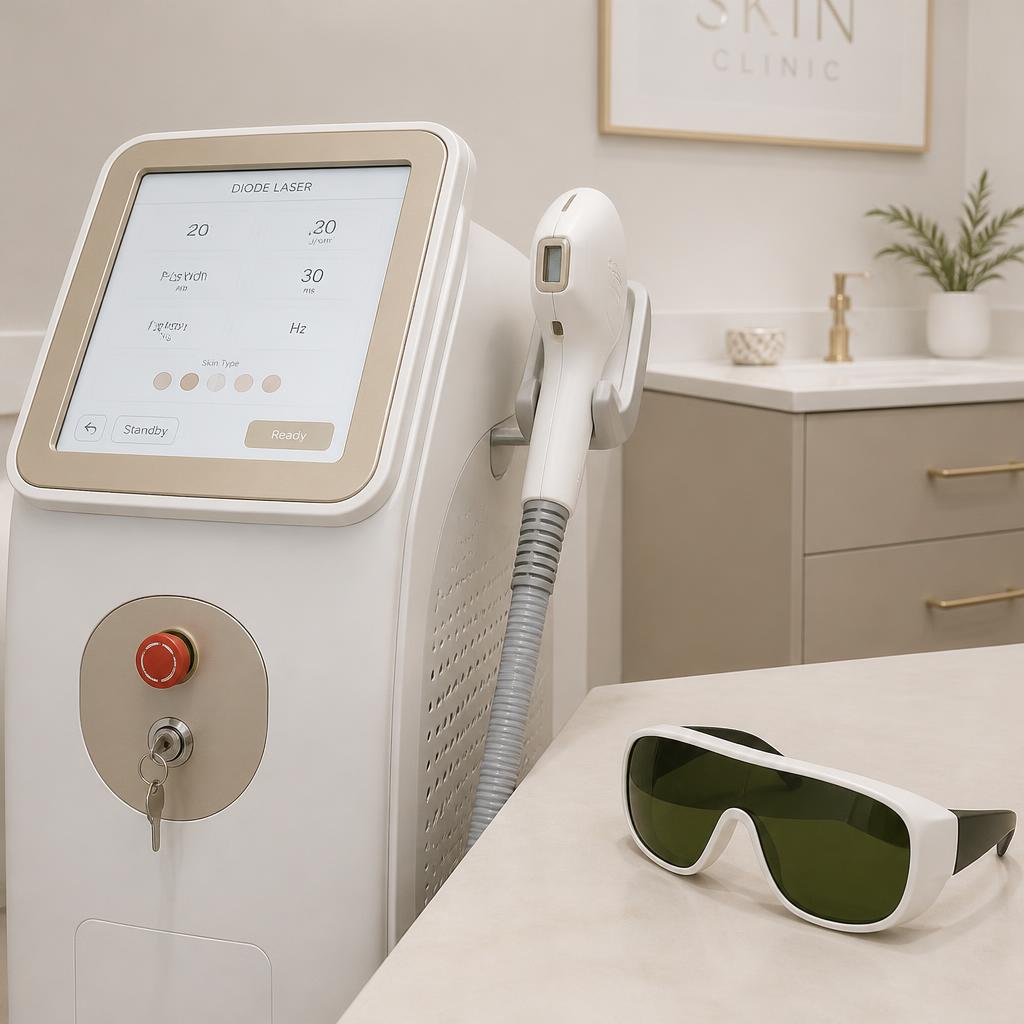
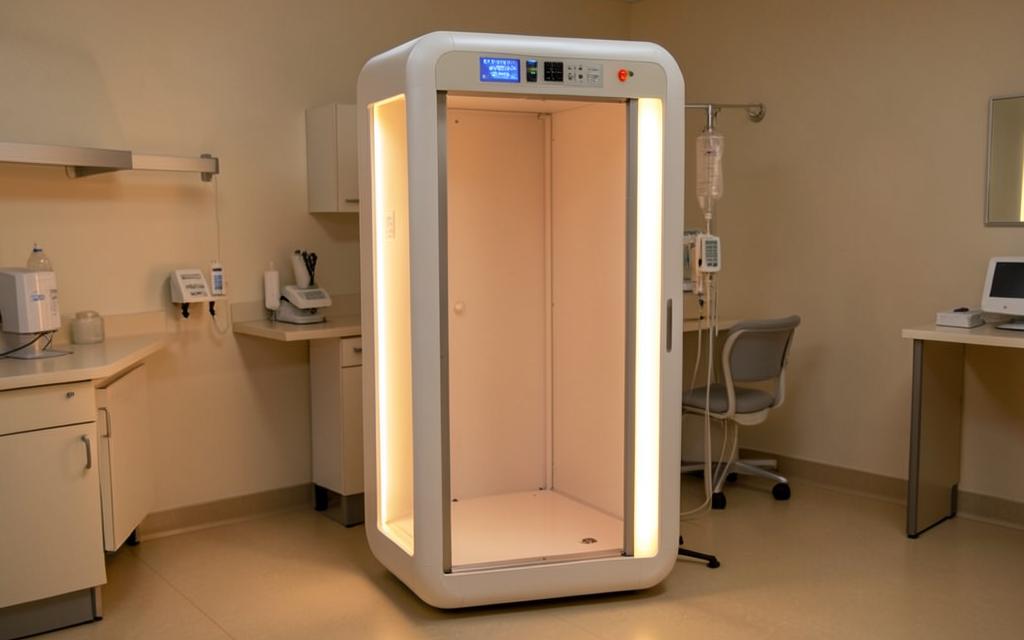
The starting dose is based on skin type or on a minimal erythema dose test. Treatment is given two or three times weekly in a whole body cabinet, or with a handheld or targeted device for localised disease. Each exposure lasts seconds to a few minutes and the dose is increased incrementally as tolerated.
Face and genitals are shielded unless they are the treatment target, and eye protection is worn throughout. Missed sessions require the dose to be reduced, so consistency matters for both efficacy and safety.
Vitiligo: what to expect
Repigmentation begins as small pigmented dots around hair follicles within the white patches, gradually enlarging and merging. The face and neck respond best, the trunk moderately, and the hands, feet and lips respond poorly because they have few hair follicles [2].
Combining narrowband UVB with a topical calcineurin inhibitor or a topical steroid improves outcomes. Patients need to understand that this is a long programme, and that maintaining the new pigment usually requires ongoing sun protection and sometimes maintenance treatment.
Safety
Short term effects are erythema resembling sunburn, dryness, itch and, occasionally, reactivation of cold sores or polymorphic light eruption. Photosensitising medications must be reviewed before starting.
Long term, cumulative ultraviolet exposure raises theoretical concerns about photoageing and skin cancer. Studies of narrowband UVB have not shown a clear increase in skin cancer risk at typical treatment numbers, in contrast with oral PUVA where the risk is established [1]. Cumulative session counts are recorded and reviewed.
Frequently asked questions
Is it the same as a tanning bed?
No. Tanning beds emit mainly UVA at uncontrolled doses. Medical narrowband UVB emits a specific therapeutic wavelength at a measured dose under supervision, and tanning beds are not an acceptable substitute.
Can children have phototherapy?
Yes, in children old enough to stand still, wear goggles and cooperate, usually from around seven to ten years, and it is a valuable option in extensive vitiligo and eczema.
What if I live far from the clinic?
Home narrowband UVB units and targeted handheld devices exist for selected patients and are supervised remotely with a written dosing schedule and review appointments.
References
- [1] Elmets CA, Lim HW, et al. Joint American Academy of Dermatology and National Psoriasis Foundation guidelines of care for the management of psoriasis with phototherapy. Source
- [2] Taieb A, Picardo M, et al. Guidelines for the management of vitiligo: the European Dermatology Forum consensus. British Journal of Dermatology. Source
- [3] American Academy of Dermatology clinical guidelines. Source
This content is general medical education and does not replace a personal consultation. Any prescription must be coordinated with your local doctor.
Is this procedure right for you?
Book a video consultation to discuss your case, or a clinic visit in Baghdad or Karbala.