Patch testing: finding the cause of contact dermatitis
Patch testing is the only reliable way to identify a delayed contact allergy. It turns a chronic unexplained rash into a problem you can avoid.
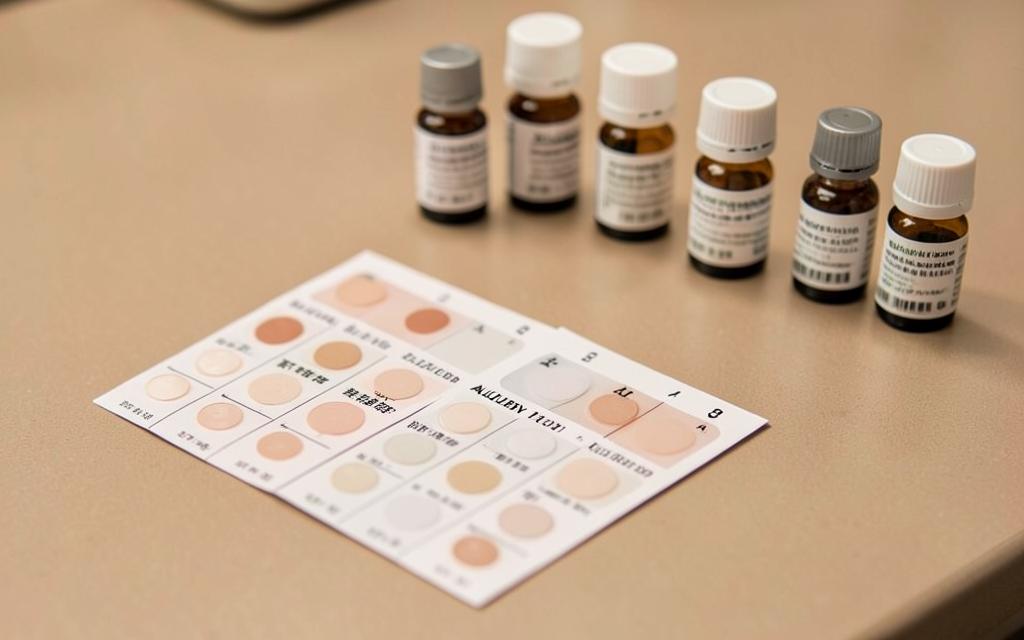
Allergic contact dermatitis is a delayed type hypersensitivity reaction that develops over forty eight to ninety six hours after exposure. Because the reaction is delayed, prick tests and blood allergy tests cannot detect it. Patch testing applies standardised allergens to the back under occlusion and reads the reaction over several days [1].
Key points
- The reference test for allergic contact dermatitis, which blood tests cannot diagnose
- Requires three visits over roughly one week
- Nickel, fragrance mix, preservatives and hair dye are the commonest positives
- Patients can bring their own products for testing where appropriate
- A positive result must be relevant to the patient exposure to be meaningful
Who should be tested
Testing is indicated in chronic or recurrent eczema without a clear cause, hand and foot dermatitis, facial and eyelid dermatitis, dermatitis in occupations with heavy exposure such as hairdressing, construction, cleaning and healthcare, eczema that does not respond as expected to treatment, and dermatitis around leg ulcers or surgical sites.
It is also useful in patients with long standing atopic eczema whose pattern of disease changes, since a superimposed contact allergy is common in that group.
How it is done
Small chambers containing standardised allergen preparations are taped to the upper back on day zero and must stay dry and in place. On day two the patches are removed and a first reading is taken. A second reading is performed on day four, and sometimes a further reading on day seven, because some allergens such as corticosteroids and neomycin react late [1].
Reactions are graded from doubtful to strong positive. An irritant reaction, which looks sharply demarcated and fades quickly, is distinguished from a true allergic reaction, which is spreading, palpable and persists or increases at the later reading.
- Day 0: patches applied, keep back dry, no showering or heavy sweating
- Day 2: patches removed, first reading
- Day 4: second reading, the most informative
- Day 7: optional late reading for delayed reactors
Common allergens and where they hide
Nickel remains the most frequent positive worldwide and is found in jewellery, watch backs, belt buckles, spectacle frames and mobile phones. Fragrance mixes and Myroxylon pereirae are next, present in cosmetics, cleaning products and many so called unscented items.
Preservatives such as methylisothiazolinone caused a documented epidemic of facial and hand dermatitis after being introduced widely into cosmetics and wipes, and remain an important cause. Paraphenylenediamine in hair dye and in black henna tattoos is a significant cause of severe facial and scalp reactions, and black henna in particular can sensitise children for life [2].
What happens after a positive result
Relevance is assessed by matching the allergen to the patient exposures. A positive test with no exposure history may be a past sensitisation rather than the current cause.
Patients receive a written list of the allergen and its synonyms, since the same chemical appears under several names on ingredient labels. Avoidance is the treatment, and dermatitis usually settles over weeks to months once the exposure stops, with topical therapy for the meantime.
Frequently asked questions
Is patch testing the same as an allergy blood test?
No. Blood tests and prick tests detect immediate allergy such as hay fever and food allergy. Contact dermatitis is a delayed reaction and only patch testing can identify it.
Can I shower during the test?
The back must stay completely dry while the patches are on, so showering and heavy sweating are avoided for those two days.
Do I need to stop my medicines?
Topical steroids on the back and strong oral immunosuppressants can suppress reactions and are usually paused beforehand, following the specific instructions given to you.
References
- [1] Johansen JD, Aalto Korte K, Agner T, et al. European Society of Contact Dermatitis guideline for diagnostic patch testing. Contact Dermatitis. Source
- [2] Uter W, Werfel T, White IR, Johansen JD. Contact allergy: a review of current problems from a clinical perspective. International Journal of Environmental Research and Public Health. Source
- [3] British Association of Dermatologists patient information leaflets. Source
This content is general medical education and does not replace a personal consultation. Any prescription must be coordinated with your local doctor.
Is this procedure right for you?
Book a video consultation to discuss your case, or a clinic visit in Baghdad or Karbala.