Photodynamic therapy for actinic keratoses and superficial skin cancer
A cream that accumulates in abnormal cells, then light that activates it. Photodynamic therapy treats a whole field of sun damage with an excellent cosmetic result.
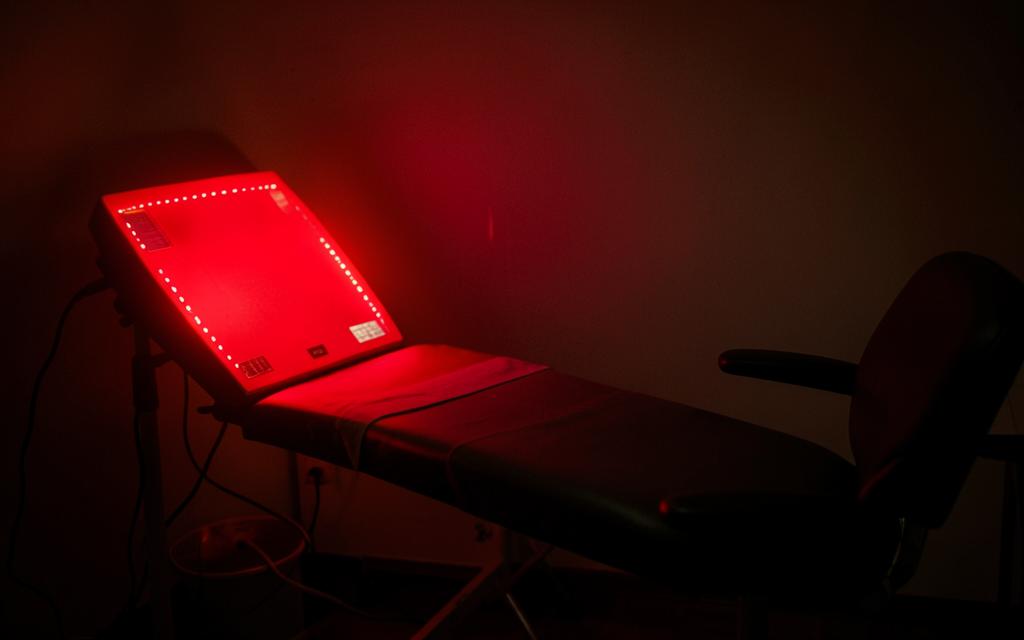
Photodynamic therapy combines a topical photosensitiser, usually methyl aminolevulinate or aminolevulinic acid, with visible light. The photosensitiser is preferentially taken up by rapidly dividing and abnormal cells and converted to protoporphyrin IX. Illumination generates reactive oxygen species that destroy those cells while sparing normal tissue [1].
Key points
- Licensed for actinic keratoses, Bowen disease and superficial basal cell carcinoma
- Treats a whole field of sun damage rather than one lesion at a time
- Clearance rates for thin actinic keratoses are high, commonly reported around ninety percent
- Cosmetic outcome is superior to surgery or cryotherapy for field treatment
- Pain during illumination is the main limitation and is managed actively
Indications
Thin and moderately thick actinic keratoses on the face and scalp are the strongest indication, particularly when there are many lesions in one area, which is called field cancerisation. Bowen disease and superficial basal cell carcinoma are also treated where surgery is difficult or the cosmetic result matters, for instance on the lower leg in an older patient with poor healing [1].
It is not appropriate for nodular or morphoeic basal cell carcinoma, invasive squamous cell carcinoma or melanoma, all of which require surgical management.
- Actinic keratoses, especially multiple lesions in a field
- Bowen disease, including sites that heal poorly after surgery
- Superficial basal cell carcinoma in selected cases
- Not for invasive or nodular skin cancers
How a session runs
Surface scale and crust are gently removed, the photosensitising cream is applied under an occlusive dressing and left for three hours. The area is then illuminated with red light for about eight to ten minutes. A second treatment one to two weeks later is standard for skin cancer indications.
Daylight photodynamic therapy is an alternative for actinic keratoses in which, after cream application, the patient sits in daylight for two hours. It is far less painful with comparable efficacy for thin lesions, though strong midday sun and high temperatures make timing important in Iraq.
Pain, healing and results
Illumination produces a burning, stinging sensation that peaks in the first minutes. Cold air, water spray, pauses and, occasionally, nerve blocks are used. Daylight protocols largely avoid this problem.
Afterwards the treated field becomes red, swollen and crusted for one to two weeks, resembling a strong sunburn, and then heals with notably good cosmetic quality. Strict sun avoidance is needed for forty eight hours because the skin remains photosensitive.
Follow up
Response is assessed at three months. Persistent lesions are re treated or biopsied, since an actinic keratosis that does not clear may be an invasive squamous cell carcinoma.
Patients with extensive field damage need long term surveillance, daily sunscreen and often repeated field treatments over the years, because photodynamic therapy treats present damage and does not prevent future damage.
Frequently asked questions
How painful is it?
Conventional red light photodynamic therapy is genuinely uncomfortable for several minutes. Daylight protocols are close to painless and are preferred for thin actinic keratoses when the weather allows.
How does it compare with cryotherapy?
Cryotherapy is quicker for a single lesion. Photodynamic therapy treats a whole field including subclinical lesions, and gives a better cosmetic result with less risk of white marks.
Will the lesions come back?
New actinic keratoses can appear in sun damaged skin regardless of treatment, which is why sun protection and regular review are part of the plan.
References
- [1] Morton CA, Szeimies RM, Basset Seguin N, et al. European Dermatology Forum guidelines on topical photodynamic therapy. Source
- [2] National Institute for Health and Care Excellence guidance on skin cancer. Source
This content is general medical education and does not replace a personal consultation. Any prescription must be coordinated with your local doctor.
Is this procedure right for you?
Book a video consultation to discuss your case, or a clinic visit in Baghdad or Karbala.