Subcision: releasing tethered acne scars from underneath
Rolling scars are pulled down from below by fibrous strands. Nothing applied to the surface can fix that, which is why subcision is the correct first move.
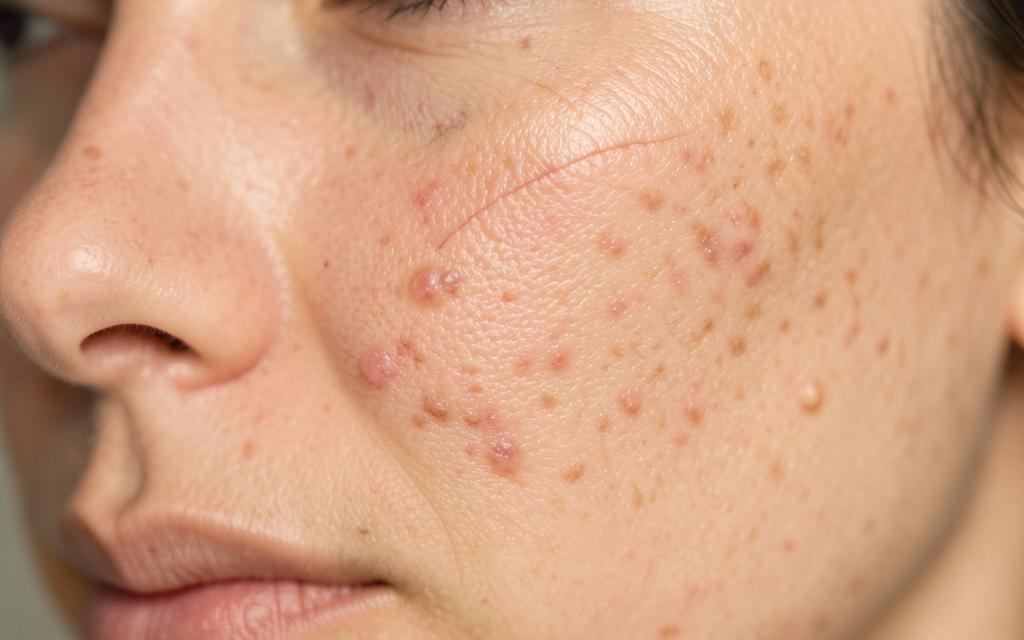
Subcision, or subcutaneous incisionless surgery, uses a needle or blunt cannula inserted through a tiny entry point to cut the fibrous bands that tether a depressed scar to the deeper tissue. Releasing those bands lets the surface rise, and the controlled bleeding that follows stimulates new collagen in the released space [1].
Key points
- The correct target is rolling scars and tethered depressions, not ice pick scars
- Improvement comes from both mechanical release and new collagen formation
- Bruising for one to two weeks is expected and is part of the process
- Two to three sessions eight weeks apart are usual
- It is most effective as the first step of a combined scar programme
Why rolling scars need release rather than resurfacing
A rolling scar has relatively normal skin on the surface that is being pulled down by fibrous strands running from the dermis to deeper structures. Lasers and peels work on the surface, so they cannot address a mechanical anchor below it. This is why patients who have had several laser sessions with no change in their rolling scars are often surprised at how much a single subcision achieves.
The release also creates a small pocket that fills with a blood clot, which organises into new collagen. Some of the improvement is immediate mechanical release and some develops over the following two months.
Technique and choices
After local anaesthesia, a needle or a blunt tipped cannula is passed in a fanning motion beneath the scar in the subdermal plane. Blunt cannula technique reduces bruising and the risk of vessel and nerve injury, while a sharp needle cuts denser bands more efficiently. Many clinicians use both according to scar density [1].
Filler or a collagen stimulator can be placed immediately into the released space in selected cases to prevent re tethering. Fractional laser is usually delayed by at least four to six weeks so that healing is not disturbed.
- Rolling scars and tethered depressions: subcision first
- Boxcar scars: subcision then fractional laser
- Ice pick scars: TCA CROSS or punch excision instead
- Post traumatic and surgical depressions: subcision with volume support
Recovery and what is normal
Expect swelling on the first day and bruising that can be dramatic for seven to fourteen days, particularly over the cheeks. Cold compresses on day one, then arnica or simple time, are the usual advice. Firm nodules can form at treated sites and settle over weeks; persistent ones respond to a small dose of intralesional steroid.
Re tethering happens in some scars and is the main reason a second session is planned rather than considered a failure.
Risks
Haematoma, prolonged bruising, temporary nodularity, infection and, rarely, damage to a superficial nerve branch. In the temple region and along the jawline the anatomy demands respect, which is why cannula technique is preferred there.
Patients with bleeding disorders or on anticoagulants require assessment, and treatment is avoided over active inflammatory acne.
Frequently asked questions
How much bruising should I plan for?
Plan for one to two weeks of visible bruising. Many patients schedule the procedure at the start of a quiet period, and it is not a treatment to have days before an event.
Will one session be enough?
Some scars release fully in one session, but two to three are typical, and the final result is judged three months after the last session.
Does it work on old scars?
Yes. Scar age matters far less than scar morphology. A twenty year old rolling scar can release just as well as a recent one.
References
- [1] Alam M, Omura N, Kaminer MS. Subcision for acne scarring: technique and outcomes in 40 patients. Dermatologic Surgery. Source
- [2] Bhargava S, Cunha PR, Lee J, Kroumpouzos G. Acne scarring management: systematic review and evaluation of the evidence. American Journal of Clinical Dermatology. Source
This content is general medical education and does not replace a personal consultation. Any prescription must be coordinated with your local doctor.
Is this procedure right for you?
Book a video consultation to discuss your case, or a clinic visit in Baghdad or Karbala.