TCA CROSS: the focused treatment for ice pick acne scars
Ice pick scars are too narrow and too deep for lasers or needling to reach. CROSS delivers a focal chemical stimulus directly into the pit.
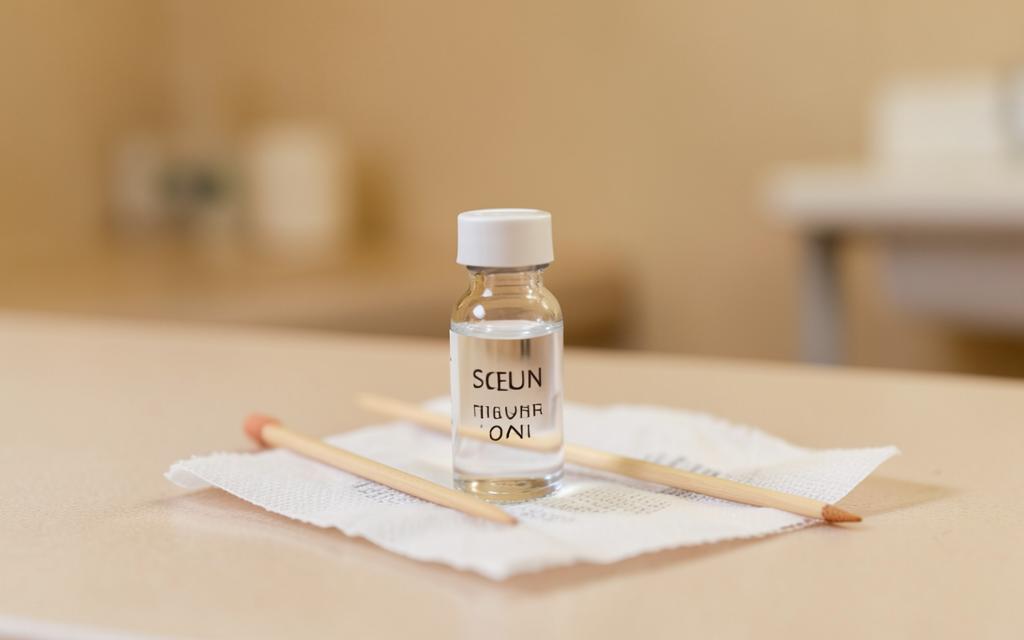
CROSS stands for chemical reconstruction of skin scars. A high concentration of trichloroacetic acid, commonly between fifty and one hundred percent, is applied with a fine wooden applicator into the base of an individual ice pick scar. The surrounding skin is untouched, so the inflammatory and collagen response is confined to the pit, which narrows and elevates over successive sessions [1].
Key points
- Designed specifically for narrow deep ice pick scars and small boxcar scars
- Three to six sessions spaced four to six weeks apart are typical
- Reported improvement of sixty to ninety percent in published series, judged over months
- It is far more targeted and safer than a full field high strength peel
- Hyperpigmentation and enlargement of the pit are the risks of poor technique
Why ice pick scars are different
An ice pick scar is a narrow tract that extends deeply into the dermis, often deeper than any fractional laser can reach and too narrow for a needling tip to enter. Fractional treatment smooths the surrounding skin and can make the pit look more obvious by contrast.
Focal chemical injury inside the tract causes the walls to coagulate and the base to fill with new collagen, so the pit becomes shallower and narrower rather than being resurfaced from above [1].
How the procedure is performed
The skin is degreased. A sharpened wooden applicator or fine toothpick is dipped in the acid, the excess is removed carefully, and the tip is pressed into the scar for a few seconds until a white frost appears within the pit only. No neutralisation is needed since trichloroacetic acid self limits.
Precision is everything. Excess acid spreading onto surrounding skin causes a wider wound, which is exactly what must be avoided. Between five and forty scars are treated in a session depending on distribution.
Recovery and results
Each treated point forms a small crust that separates within five to seven days, leaving a pink mark that fades over four to eight weeks. Sun protection during this period is essential, especially in darker skin where the pink mark can turn brown.
Improvement is gradual and cumulative. Most patients need three to six sessions, and the honest expectation is a scar that becomes shallow and much less noticeable rather than one that disappears.
- Session interval: four to six weeks
- Crusting: five to seven days per treated point
- Judgement point: three months after the final session
- Combine with subcision and fractional laser for other scar types
Safety in pigmented skin
The main risks are post inflammatory hyperpigmentation and, with too much acid, widening of the scar. Priming with a pigment inhibitor for two weeks before treatment, using the lowest effective concentration and enforcing sunscreen reduce these substantially [2].
Patients with a keloid tendency, active infection or recent isotretinoin use are not treated until those factors are addressed.
Frequently asked questions
Does it hurt?
There is a brief sting for a few seconds per scar. Most patients tolerate it without anaesthesia, and topical anaesthetic is used when many scars are treated.
Can it be combined with laser on the same day?
Usually they are separated. A common sequence is CROSS sessions first, then fractional laser six weeks after the last one to blend the surrounding texture.
Will the scars come back?
The improvement is structural and permanent, but new scars can form if active acne is not controlled, which is why acne treatment always comes first.
References
- [1] Lee JB, Chung WG, Kwahck H, Lee KH. Focal treatment of acne scars with trichloroacetic acid: chemical reconstruction of skin scars method. Dermatologic Surgery. Source
- [2] Bhargava S, et al. Acne scarring management: systematic review and evaluation of the evidence. American Journal of Clinical Dermatology. Source
This content is general medical education and does not replace a personal consultation. Any prescription must be coordinated with your local doctor.
Is this procedure right for you?
Book a video consultation to discuss your case, or a clinic visit in Baghdad or Karbala.